2 - THE BRITISH FROGMEN
The history of the British frogmen during the Second World War is quite complex and, as far as their offensive organization is concerned, owes much to the achievements and developments of similar Italian military corps, which, in this field, served as the primary reference for all other navies trying to introduce this specialty within their organizations.
The United Kingdom already had a strong tradition of salvaging shipwrecks and building and maintaining port facilities using the classic flexible diving suit and hard hat, a device that had originated in that country in the mid-19th century. However, the demands of war required a drastic change in manpower and equipment, especially regarding the enormous and extremely dangerous work of clearing and disposing mines from British and Northern European ports after the retreat of the German occupation forces. In this regard, at the beginning of 1943, some special corps (Naval Parties) began to be formed which were trained in underwater search operations for mines, projectiles and explosives in general and in their deactivation (see Fig. 55).
Another important requirement dictated by military needs during the final phase of the war was to neutralize or eliminate the defensive installations set up to protect enemy beaches before the Allied landing operations. The most significant operation in this regard was the Allied landings in Normandy (also known as D-Day) on June 6, 1944, during which British frogmen of the LCOCU (Landing Craft Obstruction Clearance Unit) demolished German underwater defensive installations with explosive charges along the access routes for Allied landing craft (see Fig. 56).
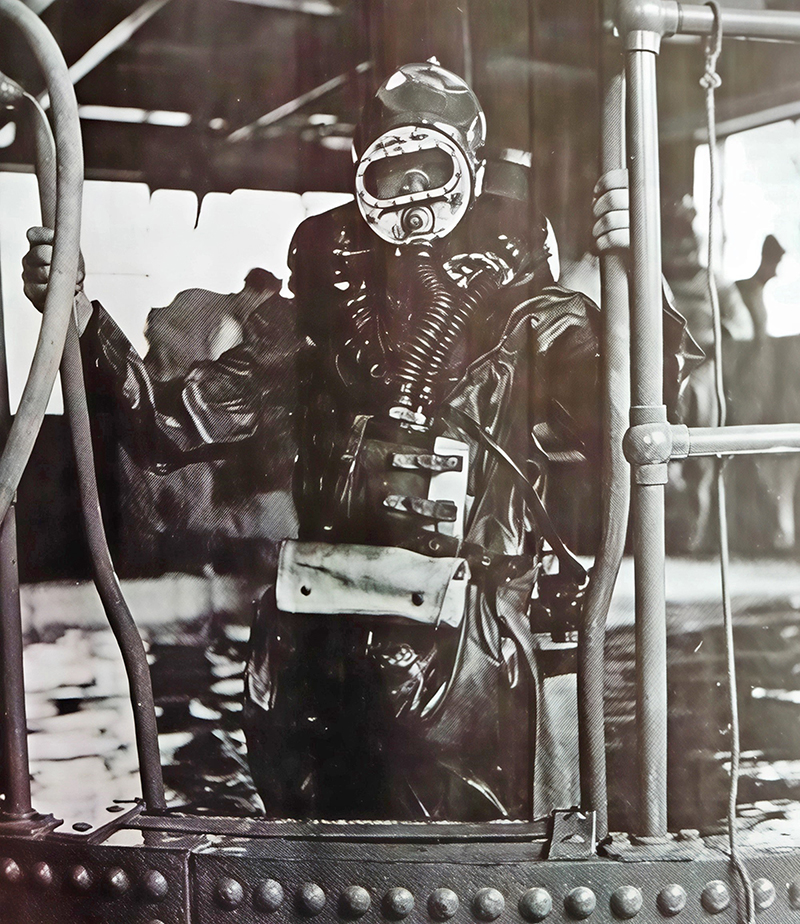
fig. 55 |
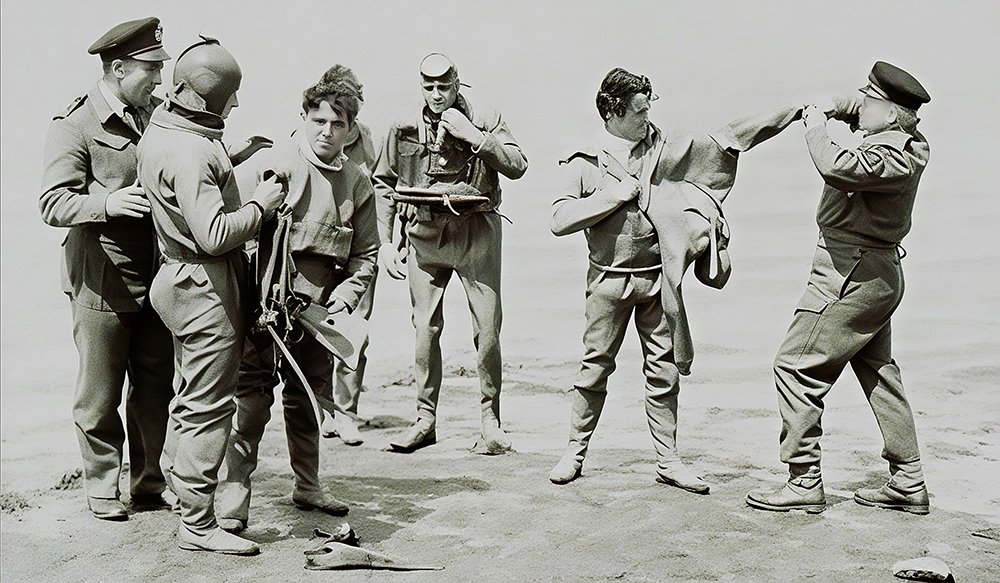
fig. 56 |
Repeated attacks by Italian naval assault teams on the ports of Gibraltar, Alexandria, and Malta pushed the British to develop a similar specialty within the Royal Navy. As was natural in the typically pragmatic English approach, in preparing vehicles and equipment, the British drew on what they had learned from analyzing materials recovered after the Italian attacks. Thus, were born the SLCs, or English "pigs", better known as “Chariots” (see Figs. 57 and 58), and the dry suits and oxygen rebreathers intended for their operators (see Figs. 59 and 60), the latter produced by Siebe, Gorman and Co. LTD.
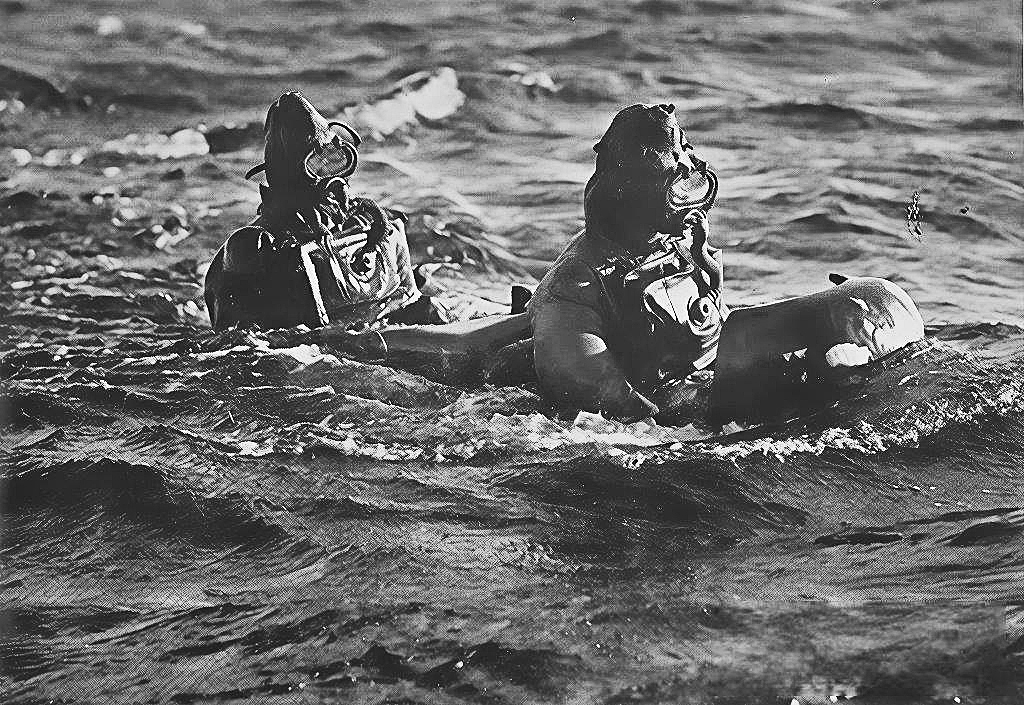
fig. 57 |
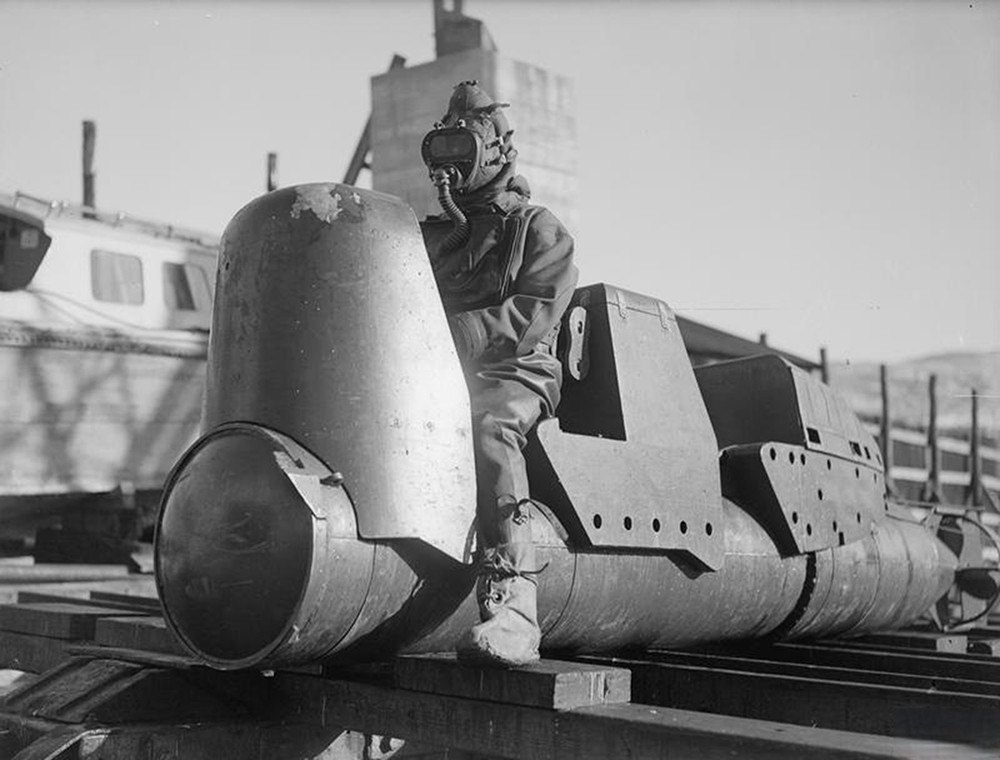
fig. 58 |
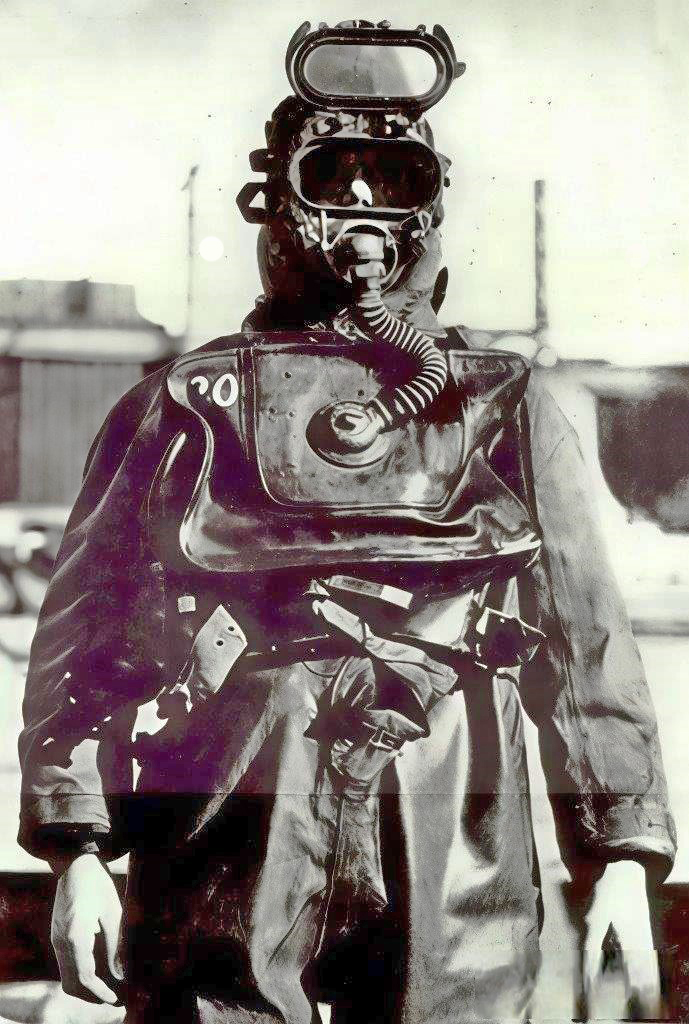
fig. 59 |
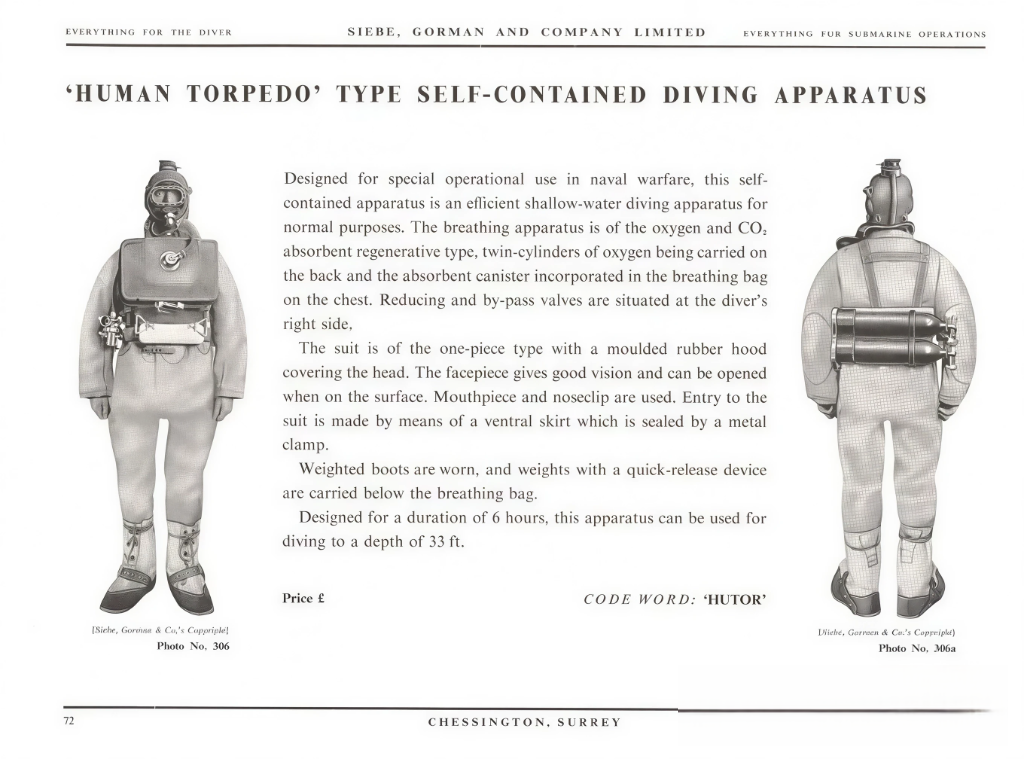
fig.60 |
Let's now analyze this equipment in detail, starting with the drysuit, which was similar in terms of materials used (rubberized canvas fabric with waterproof seams) to the Belloni suit worn by Italian "pigs" operators but differed in other key features.
This suit, for which the British Admiralty compiled and distributed a specific use and maintenance manual in 1944 (see Fig. 61), was identified as the Admiralty Shallow Water Diving Dress. It was also better known as the “Sladen” suit, in honor of Geoffrey Mainwaring Sladen, commander of the Navy's experimental unit, who invented it. The operating principle of this suit was directly derived from that of the flexible diving suit used by the “hard hat” divers. This was a completely enclosed dry suit in which the pressure inside was balanced with that of the external environment. While in the “hard hat” diver suit, the access to the inside of the suit was permitted through the opening at the neck, in the “Sladen” suit the operator could access through a sort of tubular sleeve created in the front area of the suit (see Fig. 62).
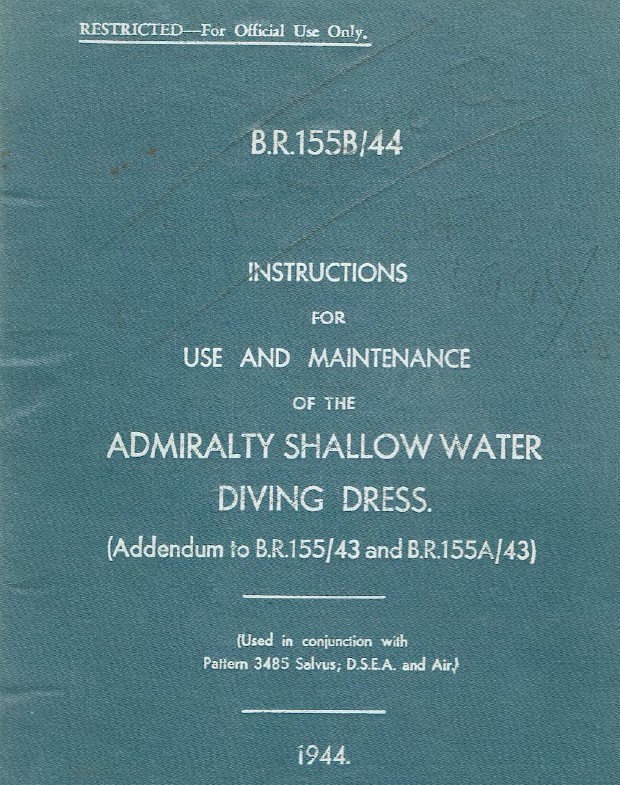
fig. 61 |
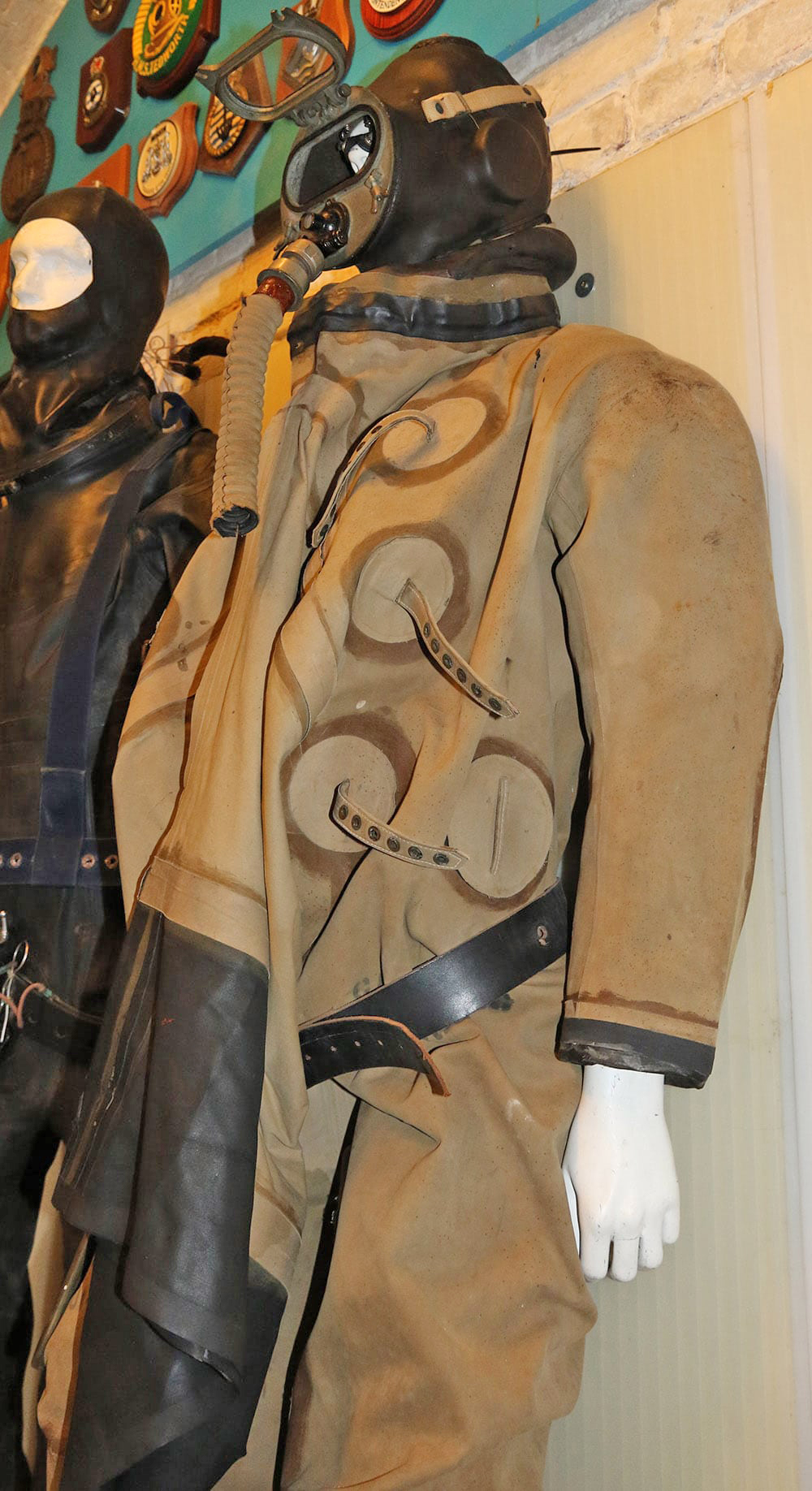
fig. 62 |
Unlike the “hard hat” diving gear, in this suit the collar and helmet were replaced by a hood and mask permanently integrated into the suit. The hood and mask were donned after the operator entered the suit through the front entrance sleeve (see Fig. 63). Finally, the front opening was closed and sealed as shown in Fig. 64 and finally inserted into a protective cover closed with ties (see Fig. 62). The access and sealing element of the “Sladen” suit was very similar to that used in the Belloni suit. During the ascent phase, the air inside the suit could be expelled to the outside through an exhaust valve located at the top of the hood (see Fig. 63). The hood of this suit (which was also used in operations with surface-linked systems) was also designed for the installation of telephone communication devices.
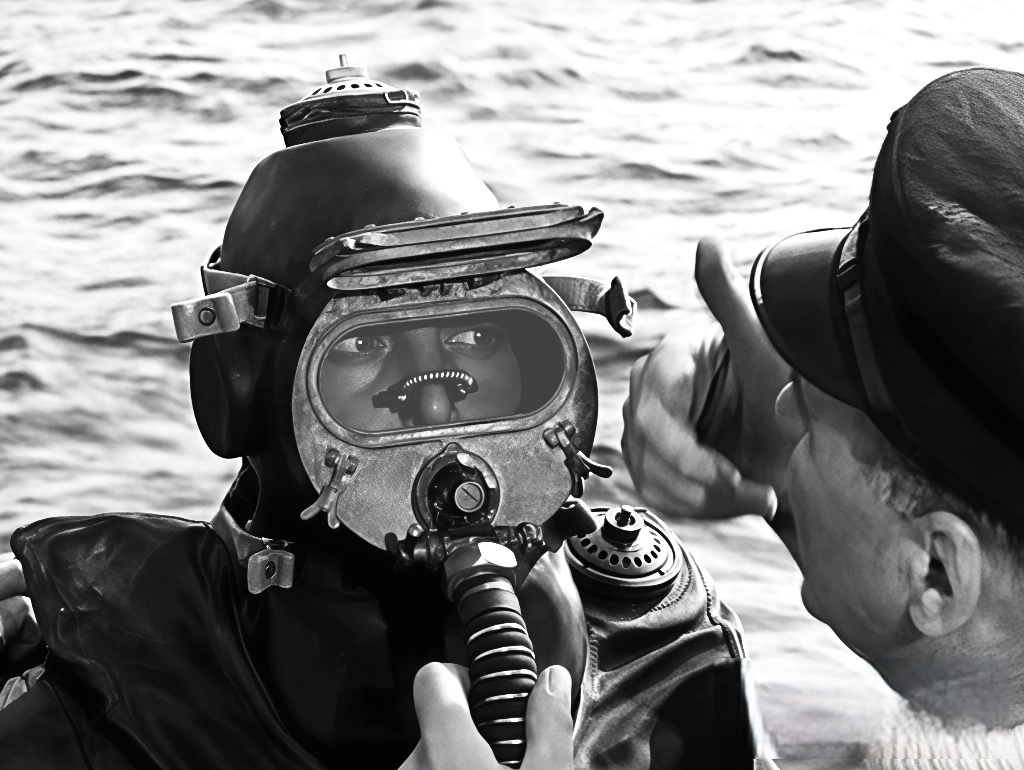
fig. 63 |
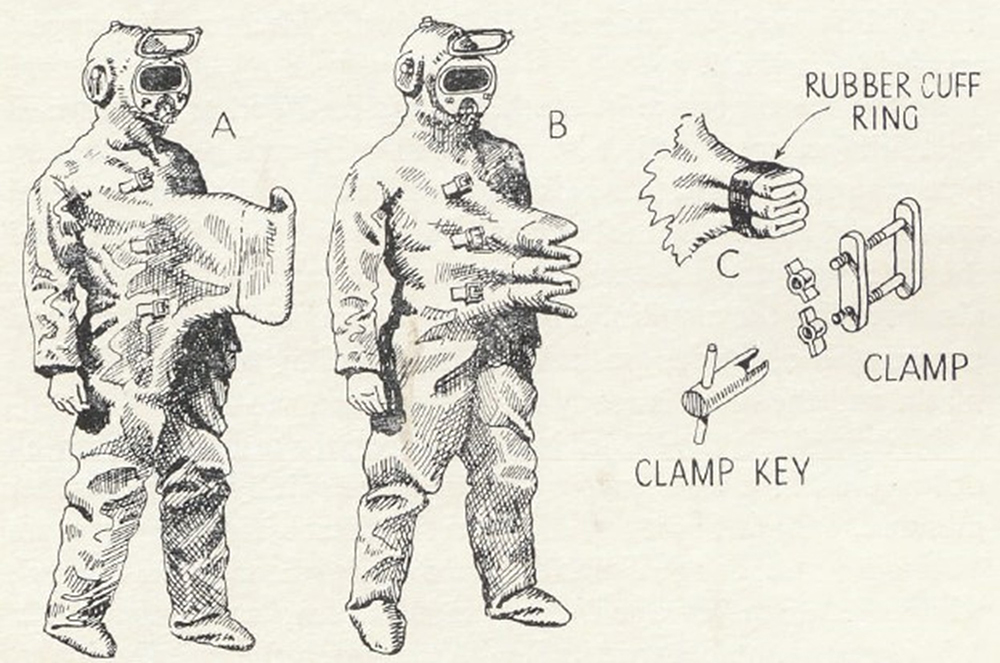
fig. 64 |
Although these features made the “Sladen” suit more complex to build and more difficult to use than the Belloni, its main advantage was that it could be pressure-compensated (simply exhaling a little gas through the mouth), thus eliminating the problem of the suit crushing against the operator's body, a very painful event that afflicted the crews of the Italian "pigs" when forced to operate at significant depths.
The unique shape of the mask opening was configured to allow the use of binoculars when the operator was on the surface.
This suit was hated by those who used it in the hot and humid environments inside submarines, especially for the terrible conditions of heat and sweating to which the operators were subjected after donning it, before being able to exit the submarine. For this reason, another nickname for this suit, "Clammy Death" had spread among users.
The piece of equipment on which the British most closely copied the Italians was the oxygen rebreather, which was designed and built almost identically to the IAC model 49/bis. The British oxygen rebreather was designed and built with the same pendular operating principle, and even the breathing bag and soda lime basket were almost identical. The main difference was the different positioning of the oxygen tanks which, in the British version, were moved from the operator's front ventral area to the back. This new position was considered more comfortable for the operators when piloting their “Chariots”. Thanks to this modification, the front ventral area was used to host counterweight, which, in the British configuration, must have been significant, especially due to the strong buoyancy of the “Sladen” suit. The complete equipment of the British “Chariot” operators is shown in Figs. 65, 66, 67 and 68, taken from original wartime videos.
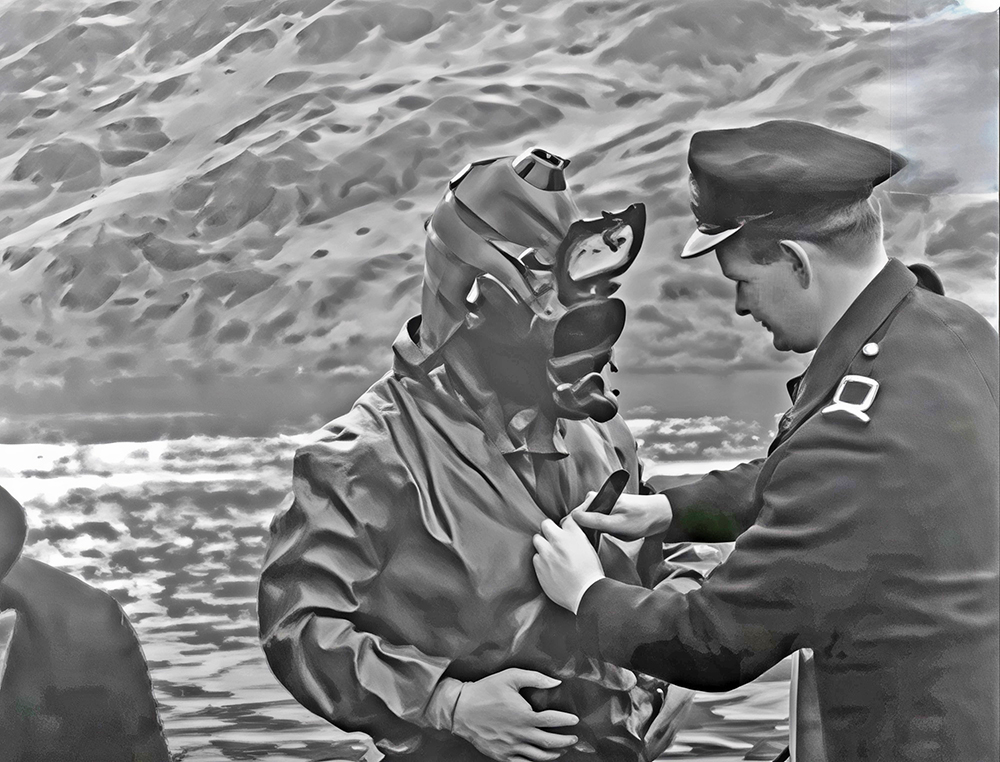
fig. 65 |
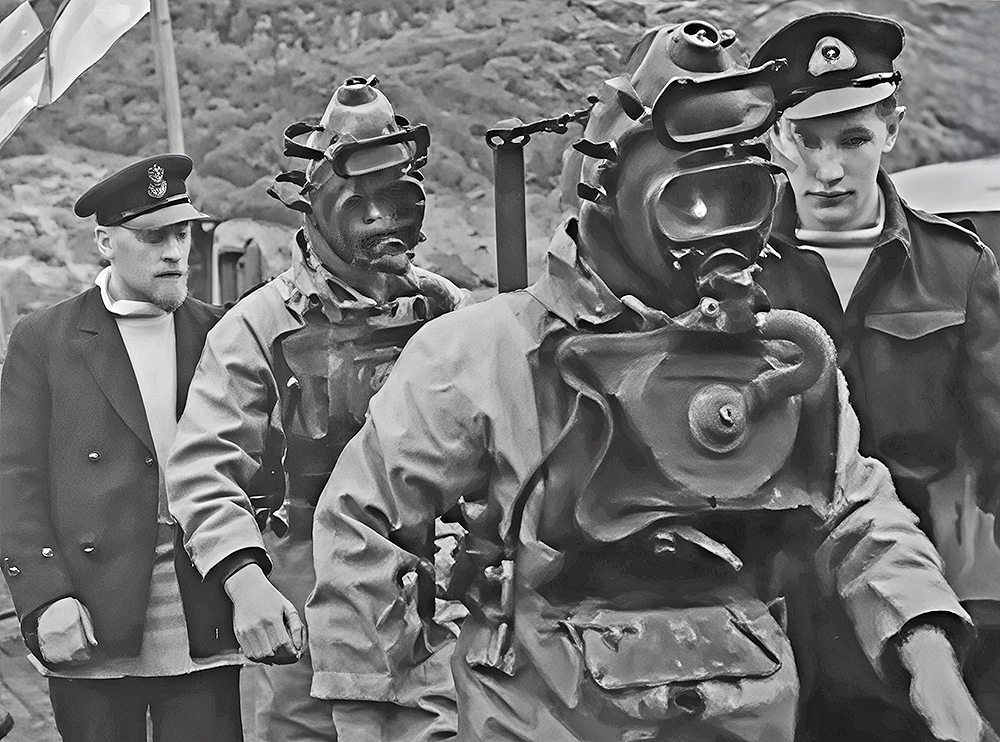
fig. 66 |
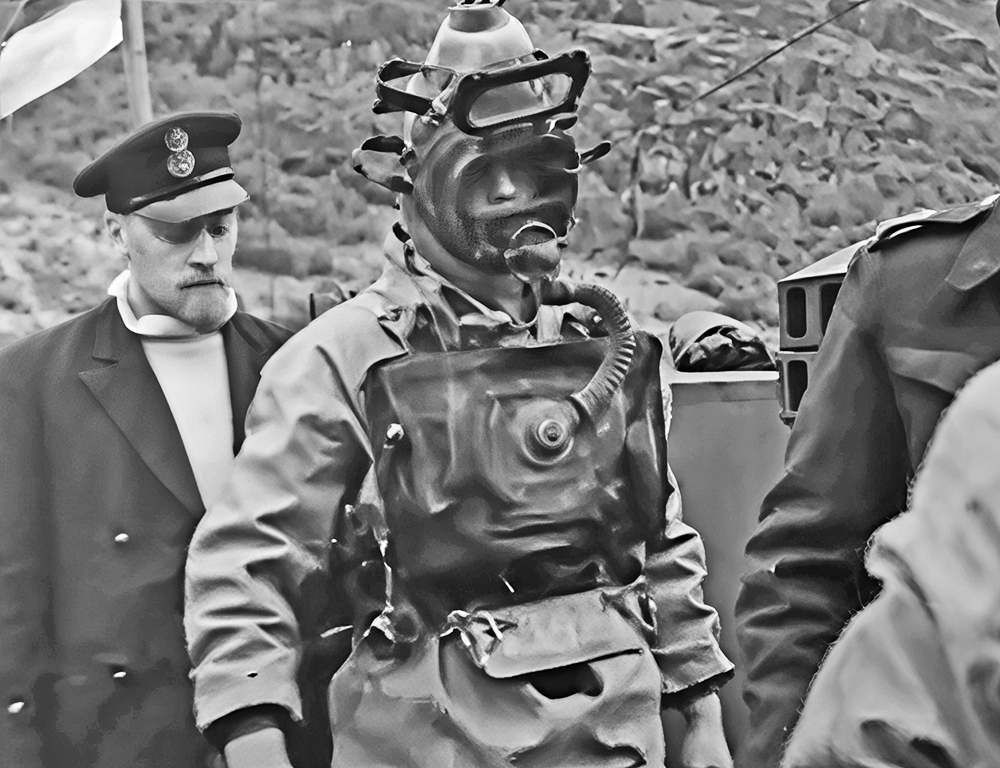
fig. 67 |
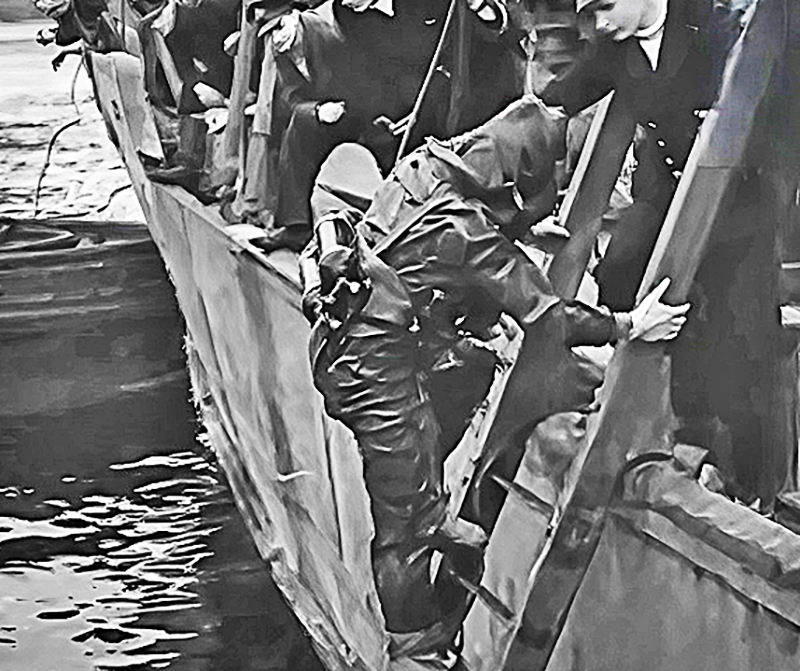
fig. 68 |
The most significant achievement of these British assault vessels against Italian military installations occurred on January 3, 1943, when a “Chariot” crew, transported by a submarine, was capable to penetrate the port of Palermo and blow up the light cruiser Ulpio Trainano, still under construction.
One of the most important movies on the war missions involving the British assault teams, was undoubtedly “Sopra di noi il mare” (see Fig. 69), a 1955 British cinema work directed by Ralph Thomas with the original title "Above Us the Waves" (see Fig. 70).
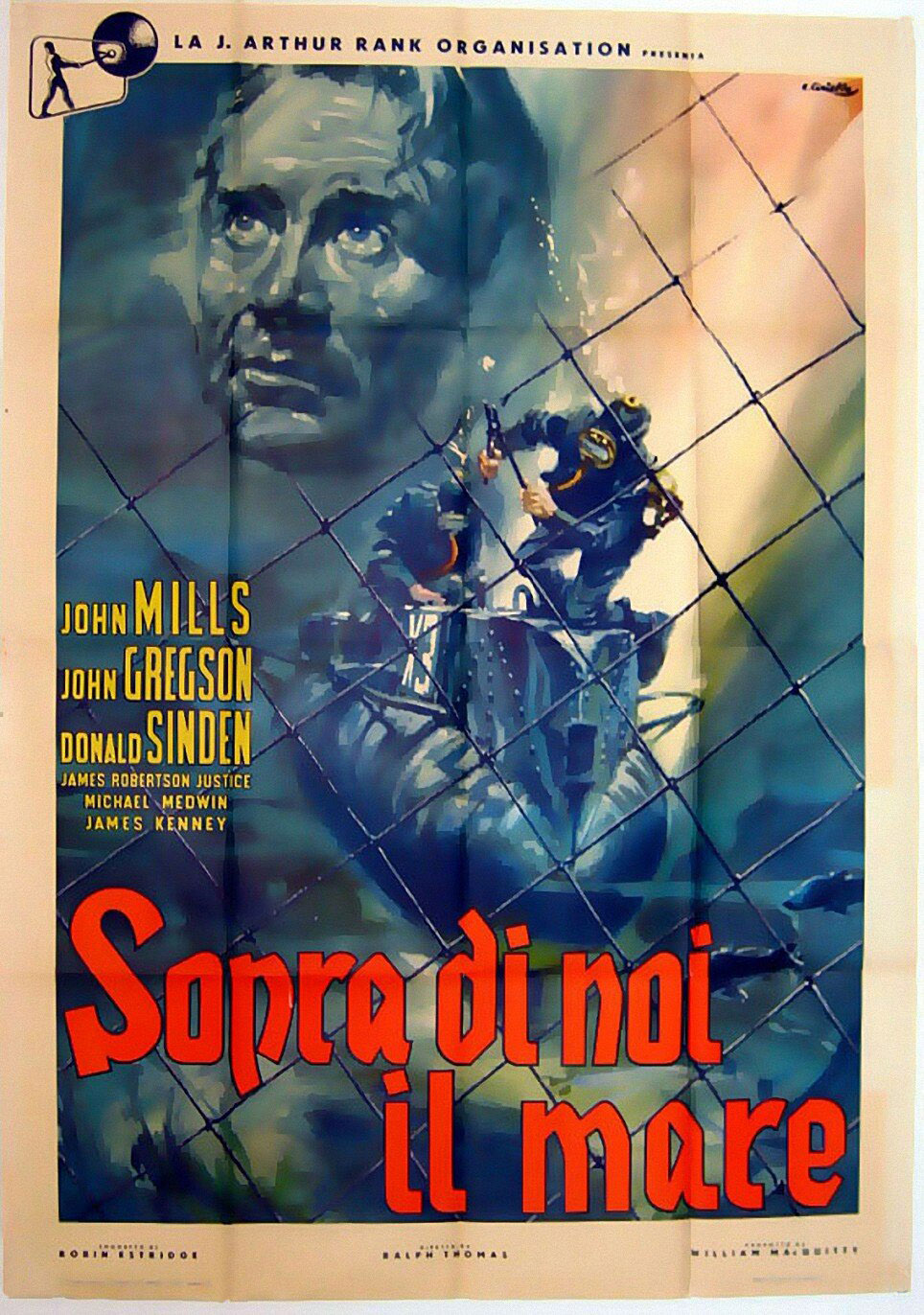
fig 69 |
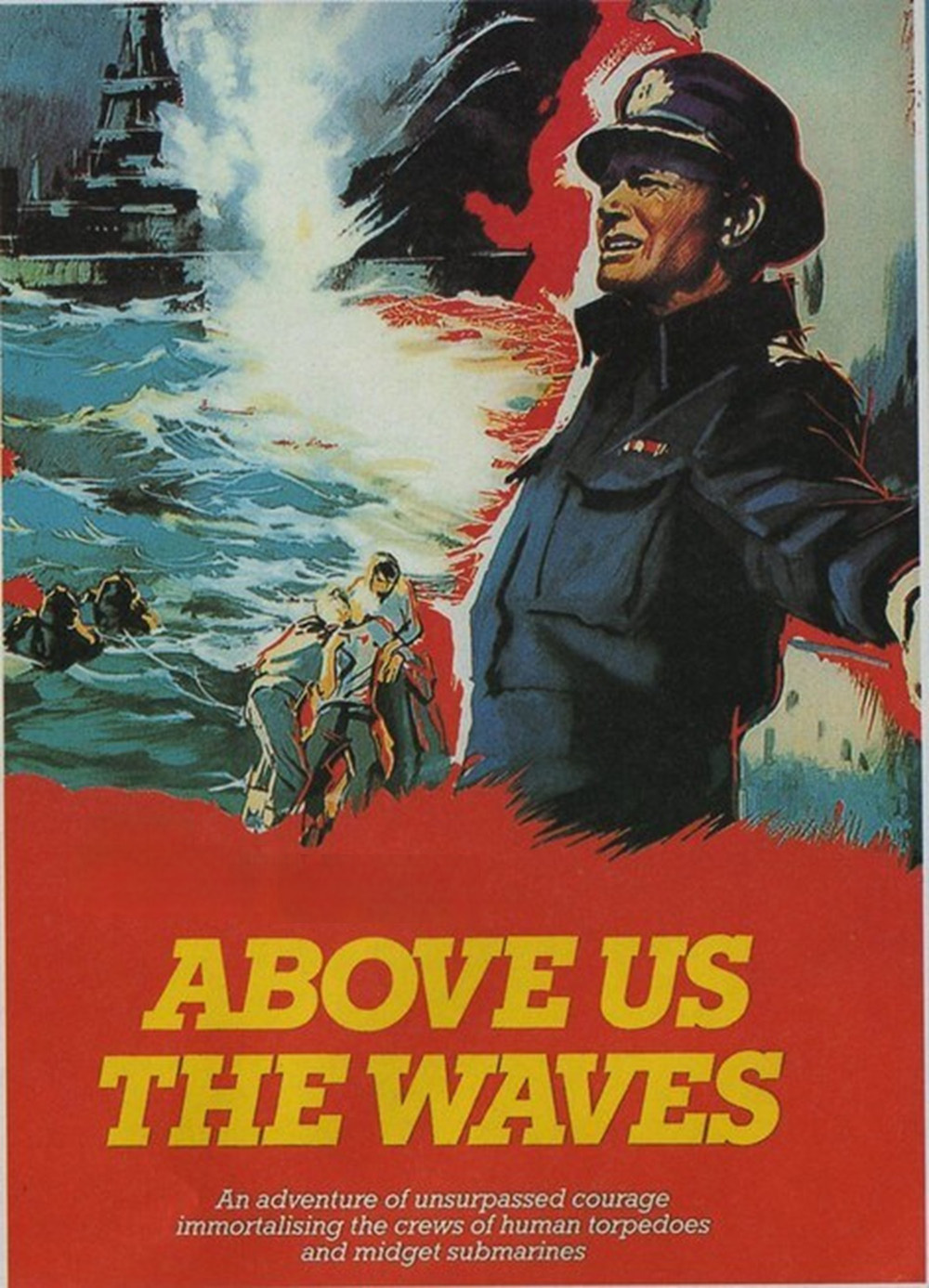
fig. 70 |
The movie's subject is inspired by the wartime events involving the British fleet during the Second World War, when the Battle of the Atlantic was beginning to turn in the Allies' favor (1942). The threat posed by the German battleship “Tirpitz” forced the Royal Navy to maintain significant forces in the North Atlantic to monitor any convoy-hunting sorties of the large vessel, thus diverting precious resources from the war against the U-boats.
The German battleship was moored in the Trondheim Fjord in Norway, protected by high cliffs, which severely limited the possibility of both surface naval attacks and air attacks. The British Admiralty thus decided to attack the “Tirpitz” using “Chariots”, which were supposed to be transported to the entrance of the fjord, secured under the keel of a Norwegian trawler. The mission failed because the “Chariots” broke away from the trawler's keel and sank due to the adverse sea conditions. Their operators were thus forced to seek safety by land, reaching the Swedish border (which was a neutral country during the war).
Therefore, the British Admiralty organized a new operation the following year (Operation Source) with X-craft midget submarines, which, towed by submarines, were released at the entrance of the Trondheim Fjord. After being released, the vessels proceeded independently, submerged, until they reached the battleship's mooring area where they then launched the final attack by placing explosive charges beneath her keel. During the mission, one of the submarines, the X3, was capable to reach the first set of protective nets and open a gap, thus spotting the battleship. Another of the boats, the X2, was unable to continue due to a malfunction in its compass and periscope and was forced to settle on the seabed to avoid the risk of revealing the other vessels. The third unit, the X6, also passed the second protective nets installation but, due to a rudder failure, had difficulty maneuvering and briefly resurfaced, coming under attack from the ship's weapons
The explosive charges were eventually dropped by the two submarines, but one of them became wedged under the “Tirpitz”, which, due to the low tide, had settled on top of the vessel. The crews of the two submarines managed to escape from their vessels before being taken prisoner by the Germans. The charges eventually exploded, seriously damaging the battleship and killing the crew of the X2, who were trapped in the boat and too close to the explosion site.
The movie's main cast included John Mills (Commander Fraser), John Gregson (Lieutenant Alec Duffy), and Donald Sinden (Lieutenant Tom Corbett).
The initial part of the work is dedicated to the selection and training phases of the Chariots' personnel. During these shootings, the original “Sladen” suits (which remained in the Royal Navy's possession for several years after the end of the war) and the evolution of the original oxygen rebreather were used (see Figs. 71 and 72).
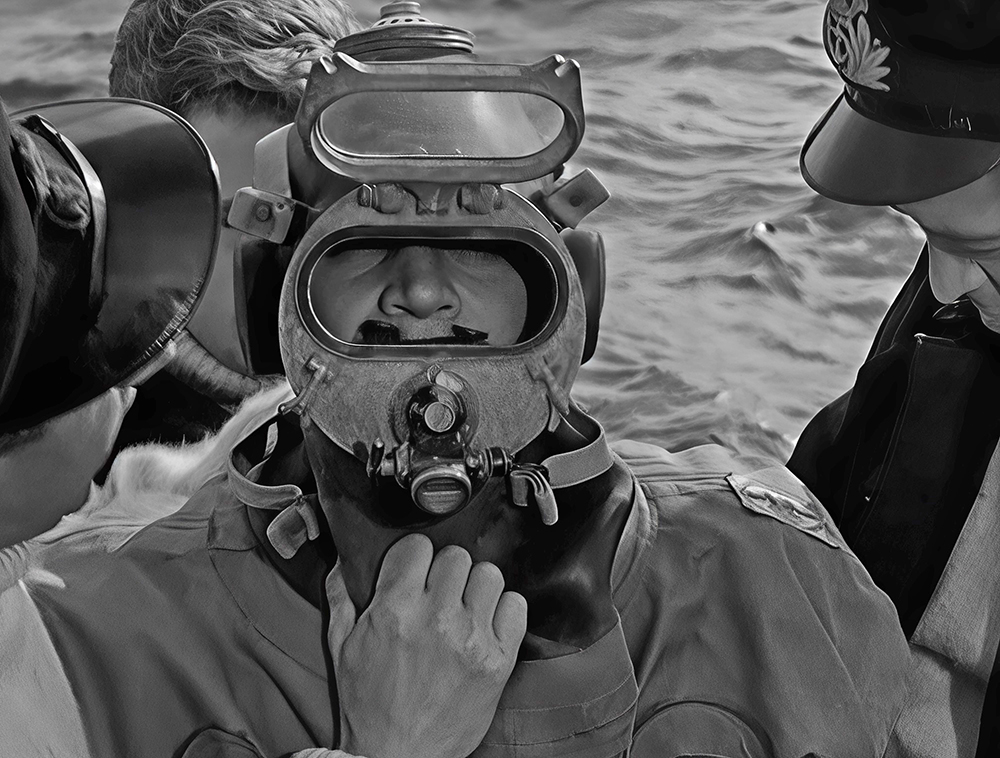
fig. 71 |
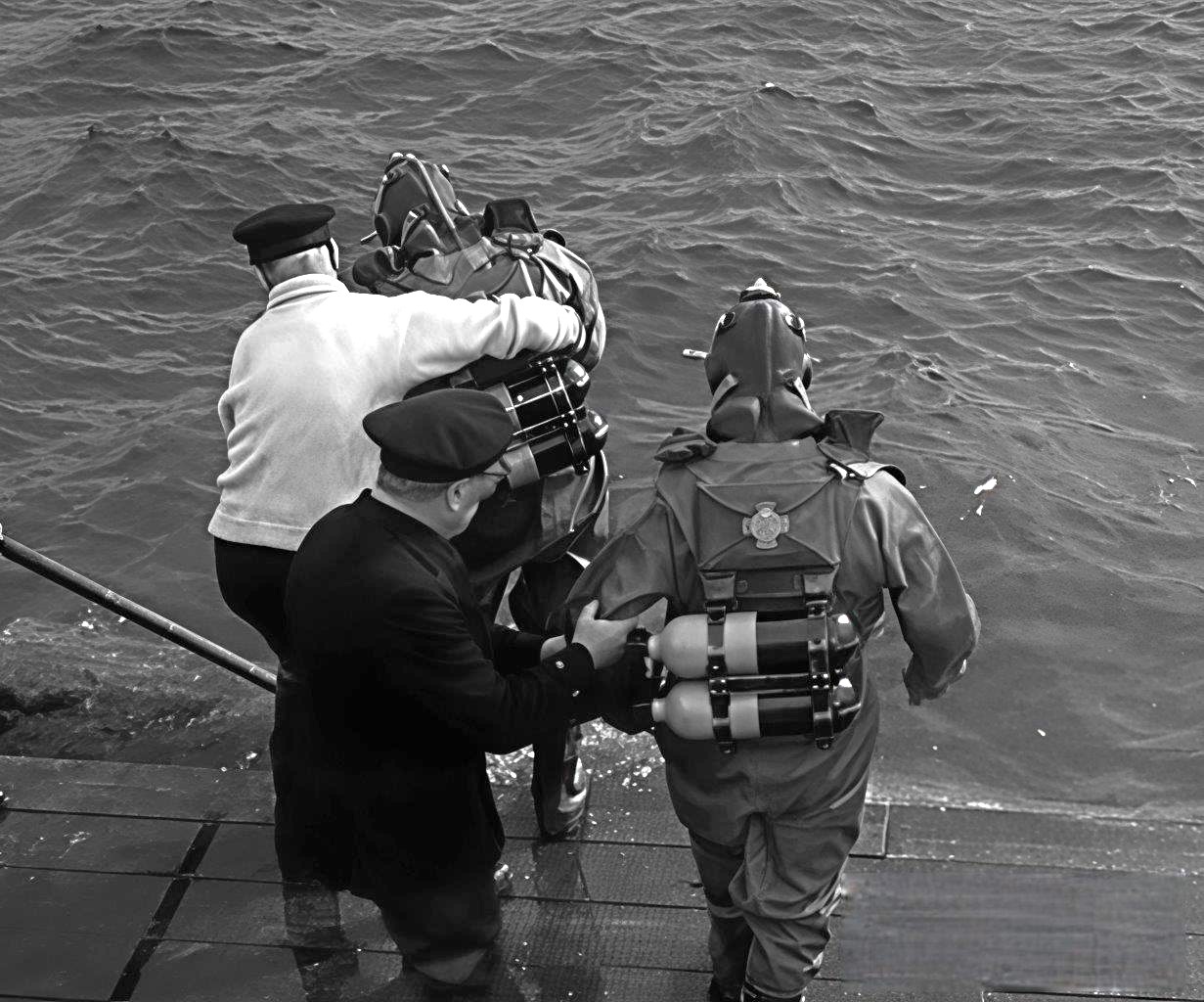
fig. 72 |
This rebreather was called the Clearance Divers Breathing Apparatus (CDBA) and included several modifications and improvements over the first versions used during the war (see Figs. 73 and 74). First, the soda lime canister was made much more accessible with the introduction of a rigid front cover that could be easily removed and reassembled, avoiding stressing and tearing the rubber of the breathing counter-lung, in correspondence of the opening for the canister insertion. In addition to the two main tanks, which remained in the rear position as in the first devices, a smaller backup tank was added in the front position. The breathing counter-lung was also equipped with an exhaust relief valve located on the upper left side (not present in wartime rebreathers).
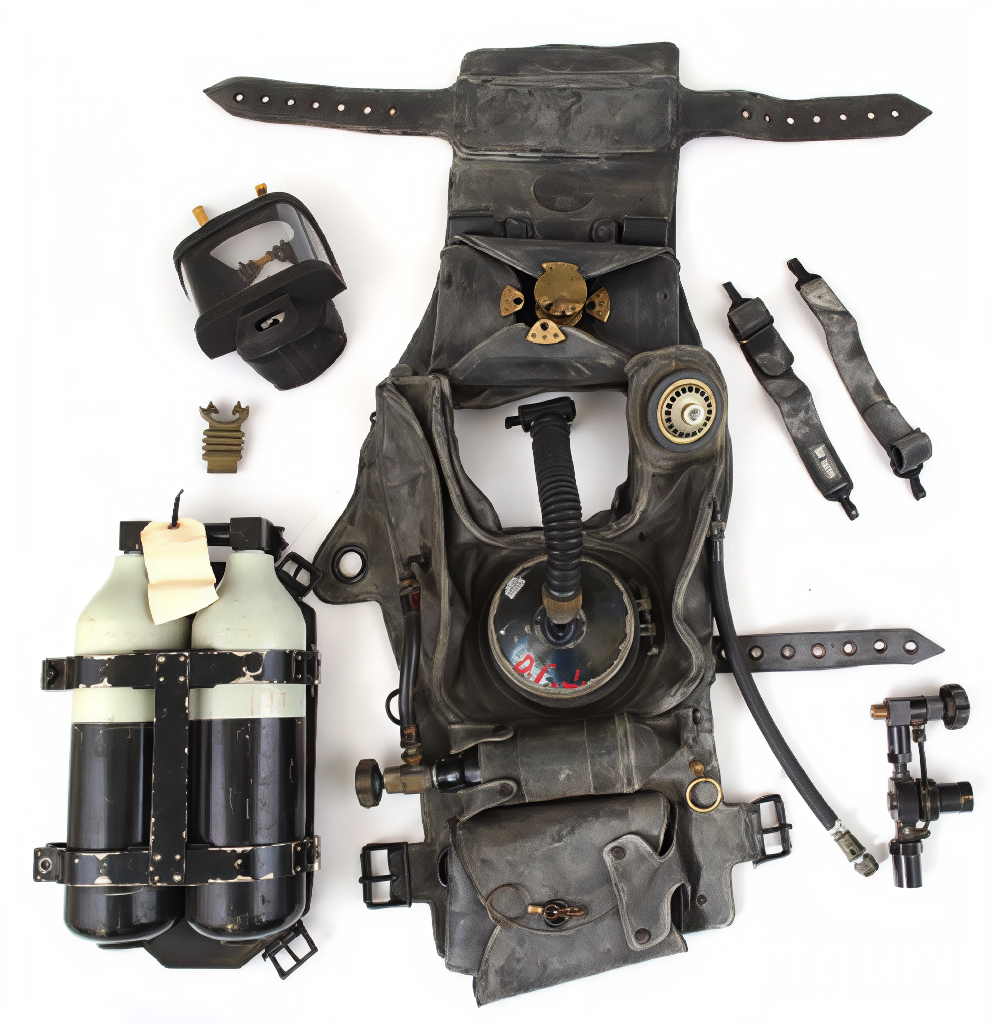
fig. 73 |
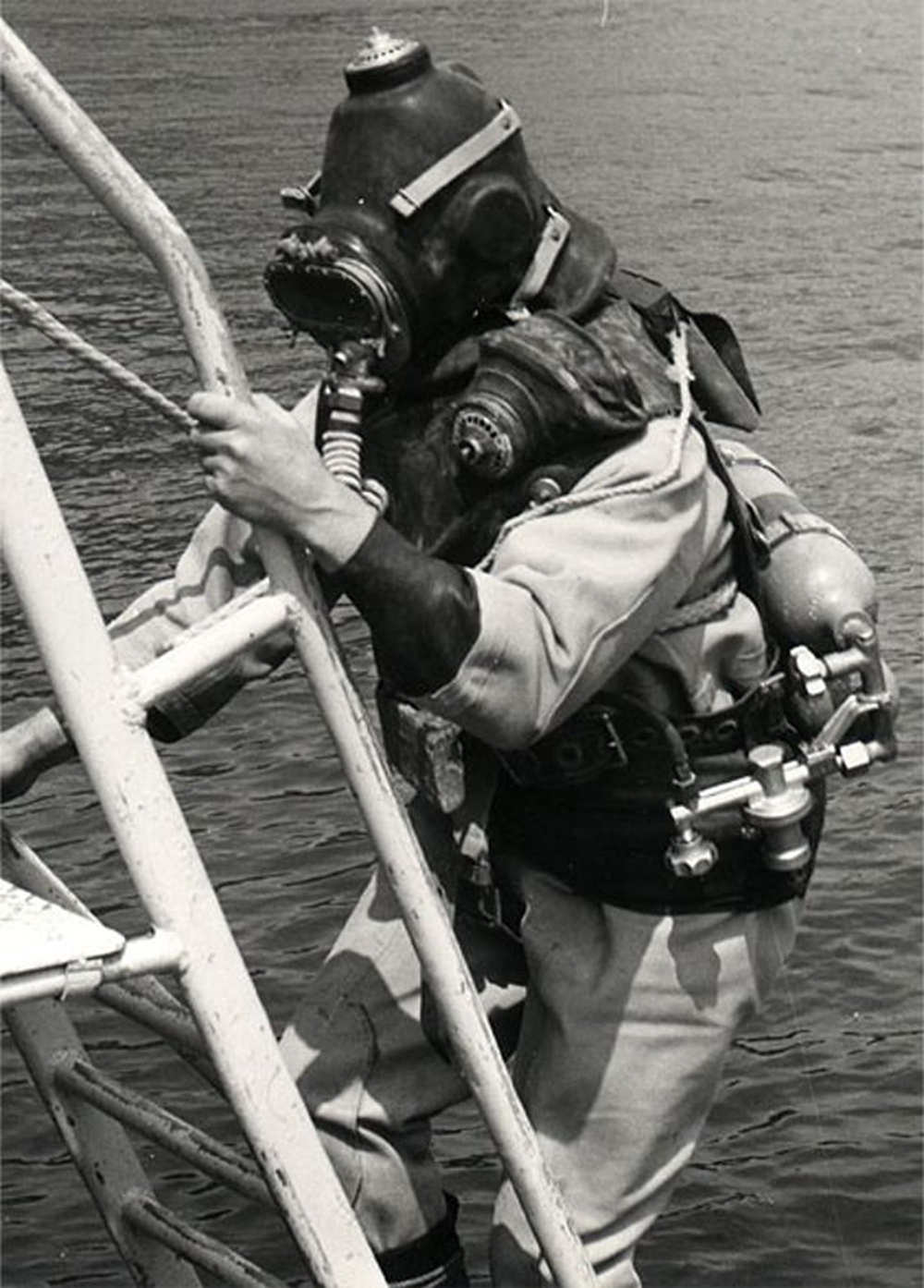
fig. 74 |
The rebreather also included two large pockets for holding counterweight. The rear one was usually filled with lead spheres (see Figs. 75 and 76).
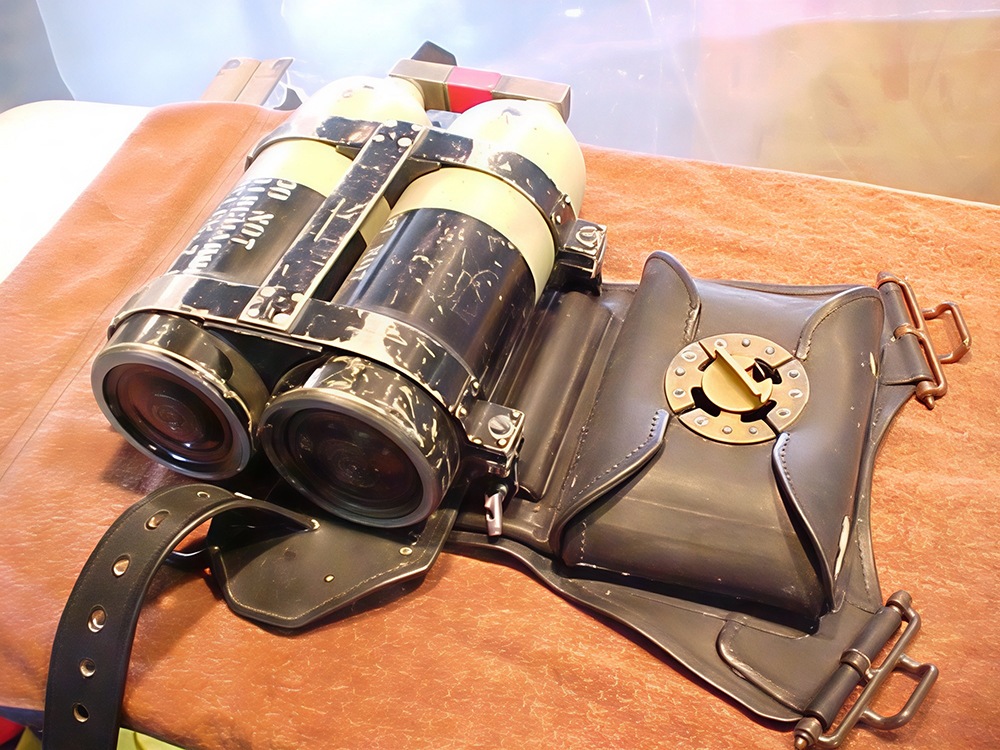
fig. 75 |
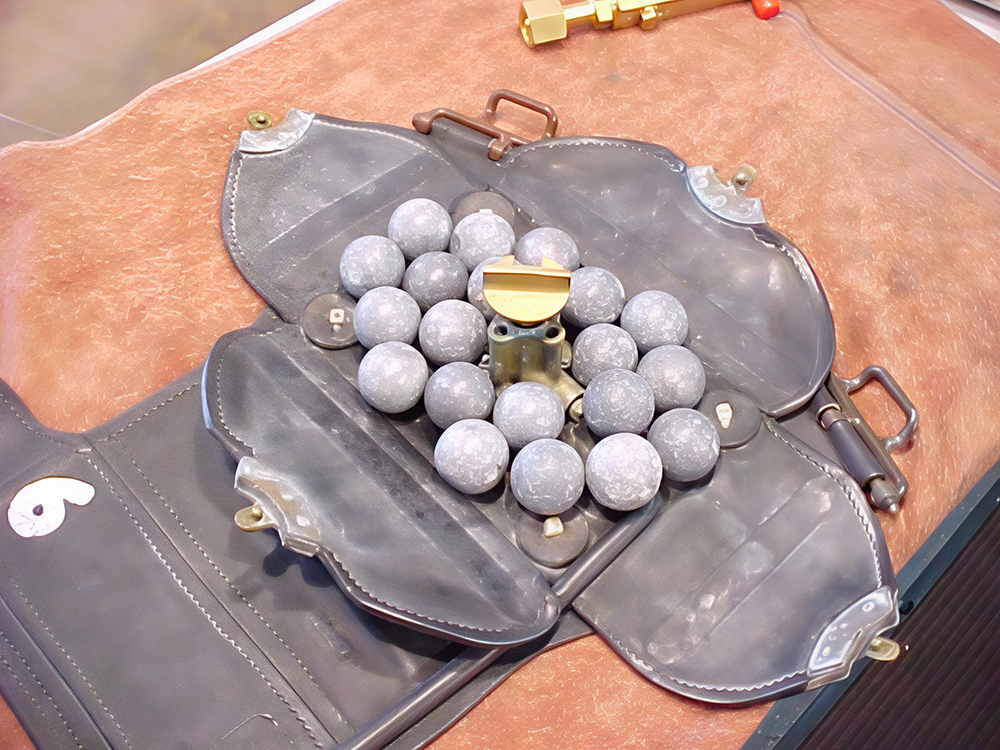
fig.76 |
Finally, this unit could also be used as an SCR (Semi-Closed Rebreather) by appropriately configuring the gas delivery system and replacing the oxygen with air or other gas mixtures. It could be combined with the “Sladen” suit with hood and integrated mask, or used with a lighter suit, in which case it was linked to a separate full-face mask.
During the final part of the movie, which shows the attack of the X-craft midget submarines (see Fig. 77) on the German battleship “Tirpitz”, the rebreather used in the shooting was the original wartime DSEA (Davis Submerged Escape Apparatus), more familiarly known to military operators as the “Davis”, also manufactured by Siebe, Gorman and Co. LTD (see Fig. 78). This device was in service with several navies (including the Italian one) even before the outbreak of the Second World War and was specifically designed to allow the evacuation and recovery of the crews of damaged submarines lying on the seabed.
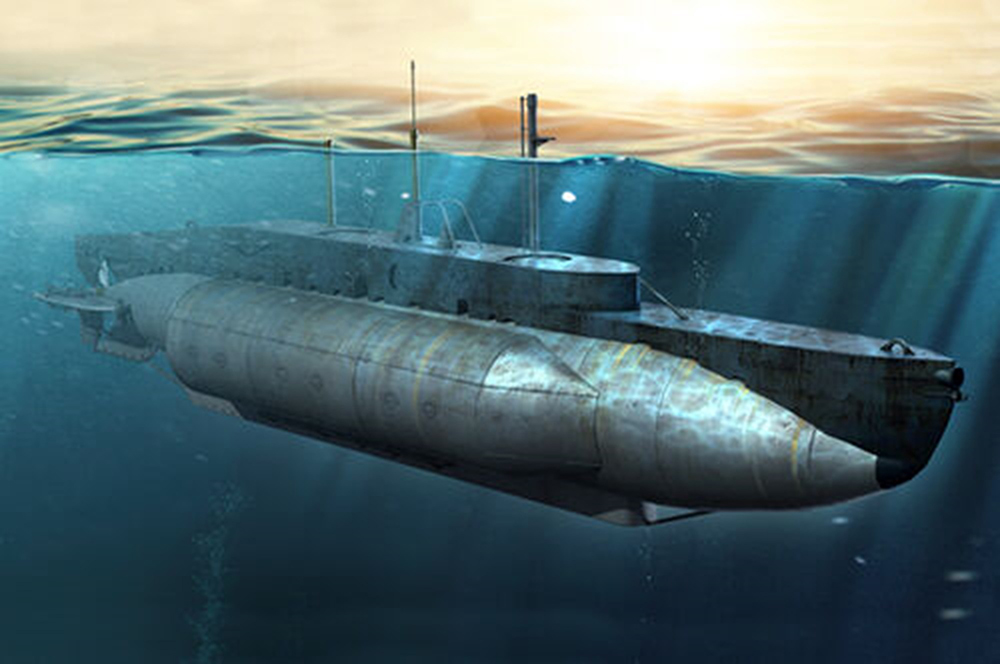
fig. 77 |
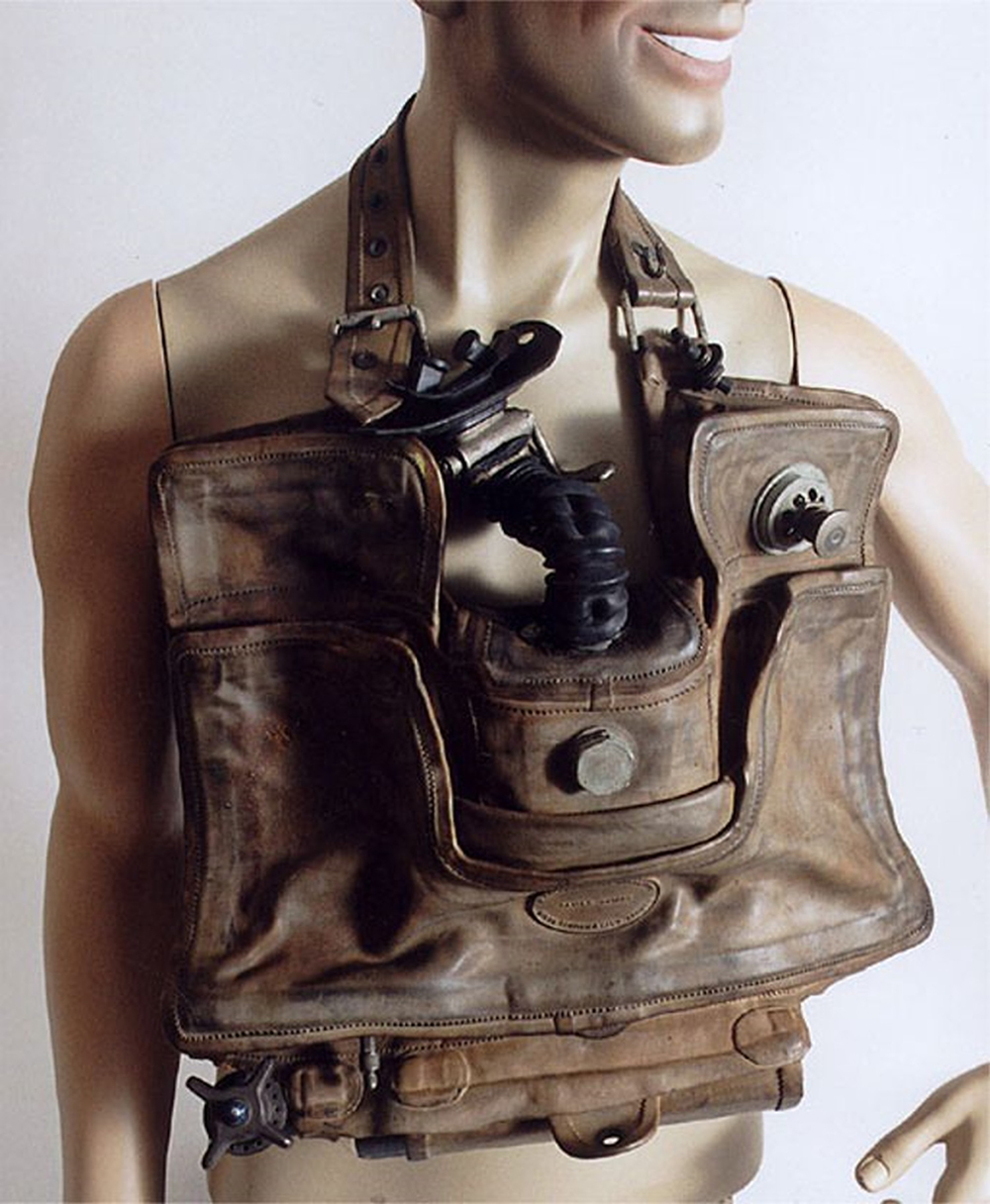
fig. 78 |
However, it was also used on several occasions for other tasks, including the one shown in the movie where a crew member of one of the X-craft midget submarines goes outside the vessel to check the exact position with respect to the target (see Figs. 79 and 80).
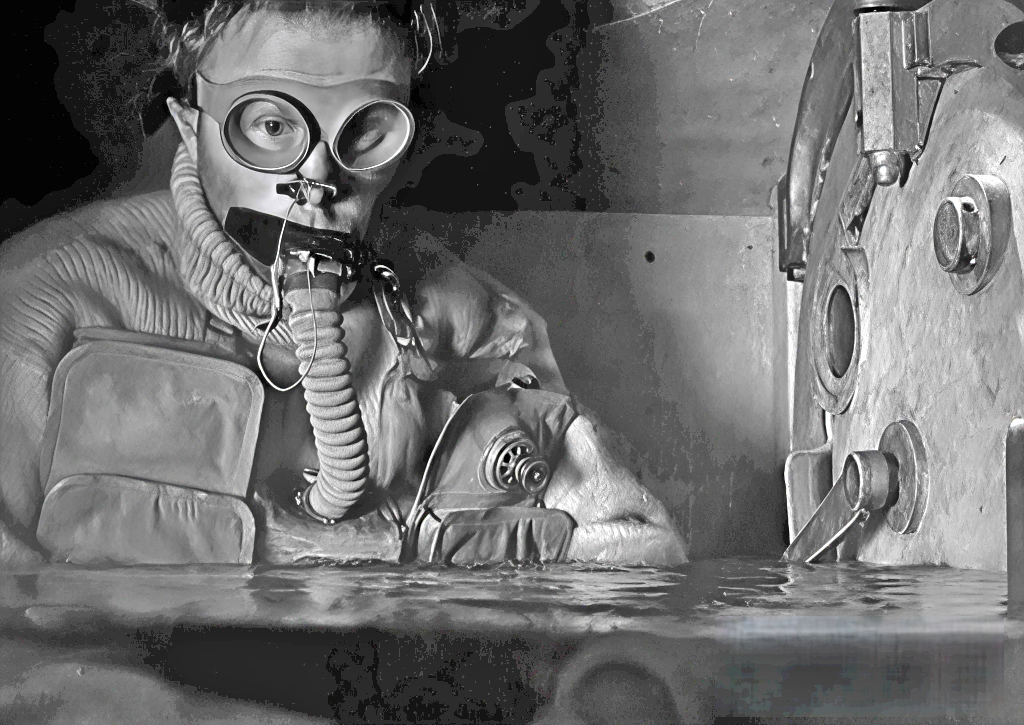
fig. 79 |
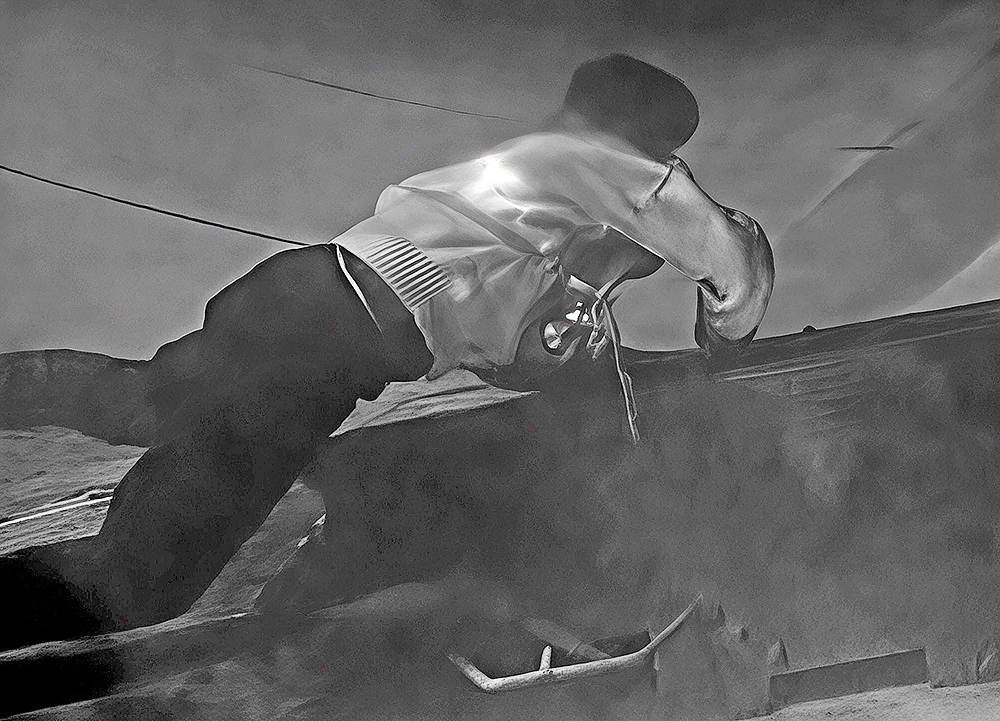
fig.80 |
Another important page in the history of the British frogmen was written by Lionel Kenneth Crabb, better known as “Buster Crabb”, undoubtedly the greatest adversary of the Italian frogmen during the numerous attacks on the British base in Gibraltar.
At the outbreak of the Second World War, Crabb was initially enlisted as an army gunner. Then, in 1941, he enlisted in the Royal Navy. The following year, he was sent to Gibraltar, where he established a diving unit specialized in searching for and deactivating the various explosive devices that Italian frogmen attached to the hulls of Allied ships. Initially, Crabb's task was simply to deactivate the explosive charges removed by the British divers, but he later learned to dive and became one of the most active members of his team. After the Armistice of September 8, 1943, Italian attacks on Gibraltar ceased, and starting in 1944, Crabb and his divers moved to Italy, where the Allies had landed and were advancing up the peninsula, pushing German forces ever further north. Here, the British frogmen were primarily responsible for clearing mines from the retaken ports.
After the war, Crabb met some of his former Italian enemies, and appreciated the quality of their equipment (which he later used himself in subsequent years). “Buster Crabb”, who had continued to work for the Royal Navy on espionage missions, mysteriously disappeared in 1956 during an underwater reconnaissance commissioned by MI6 (the British secret service) targeting a Soviet Navy cruiser moored in Portsmouth Harbour.
The story of Crabb and his frogmen in Gibraltar was told, although in a somewhat fictionalized form, in the British movie “Ora X Gibilterra o Morte” (original title in English “The Silent Enemy”).The work, released in 1958 (see Figs. 81 and 82), was directed by William Fairchild and featured among the main characters Laurence Harvey (Lionel Crabb), Dawn Addams (officer Jill Masters), John Clements (admiral), Michael Craig (chief diver Sidney Knowles), Arnoldo Foà (Italian spy Tomolino).
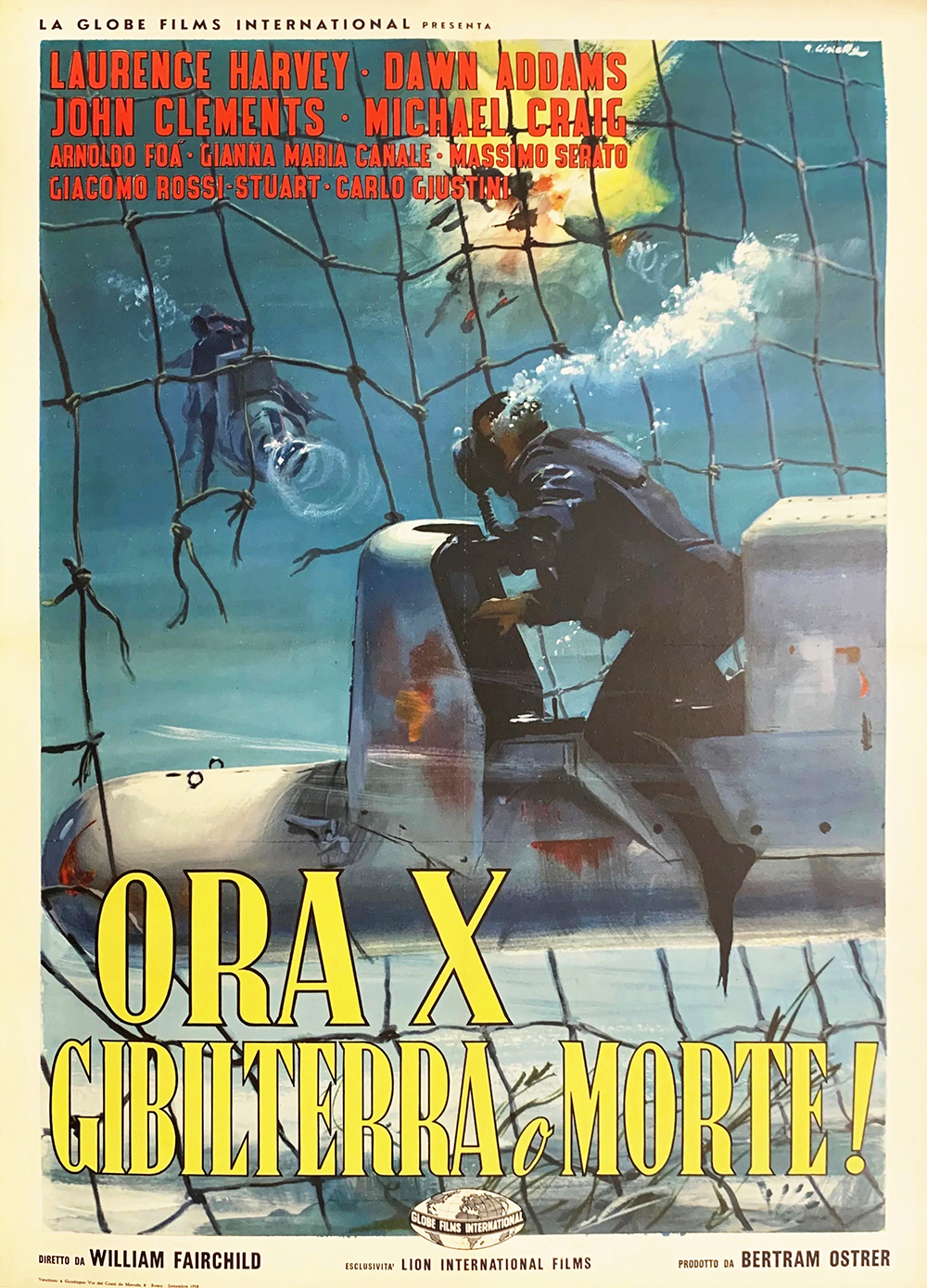
fig. 81 |
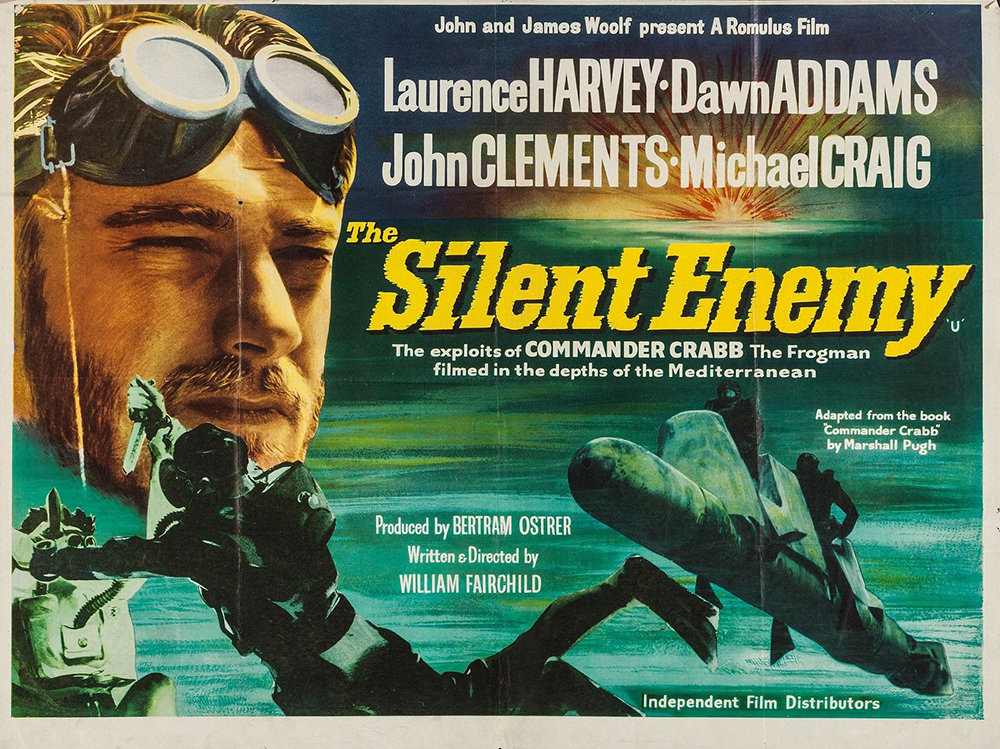
fig. 82 |
The opening of the movie shows Crabb's training and organization of the bomb disposal diving team. Initially, these men had minimal equipment, not designed for their purposes at all. They had no thermal protection from the cold other than thick wool sweaters, and they didn't even have fins. The only self-contained breathing apparatus available at the time was the Davis (DSEA) mentioned above, which could only provide 15–20 minutes of underwater working time due to its very small tanks. The photo in Fig. 83 shows Crabb himself equipped with the Davis during his typical shift. During their inspections of ship hulls, the divers therefore had to frequently resurface to replace their oxygen tanks. During underwater operations, they were constantly linked to the surface by a safety rope that served as a communication system and was also used to recover the operator in emergency conditions.
Some sequences showing the use of the Davis and taken directly from the shootings, are contained in Figs. 84, 85, 86, 87 and 88.
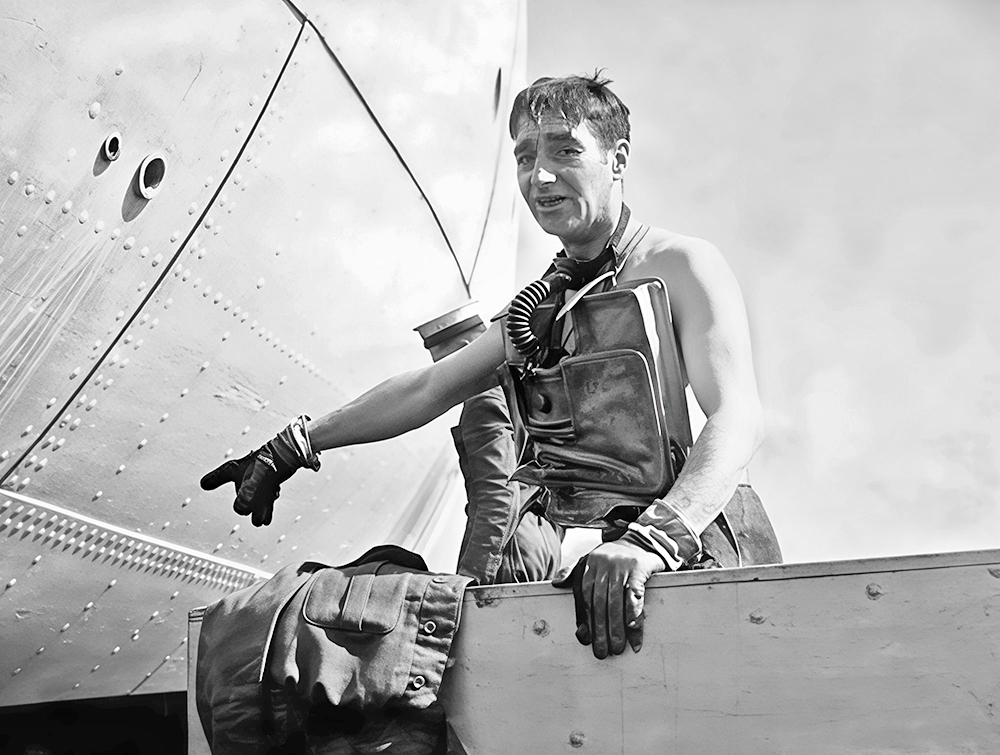
fig. 83 |
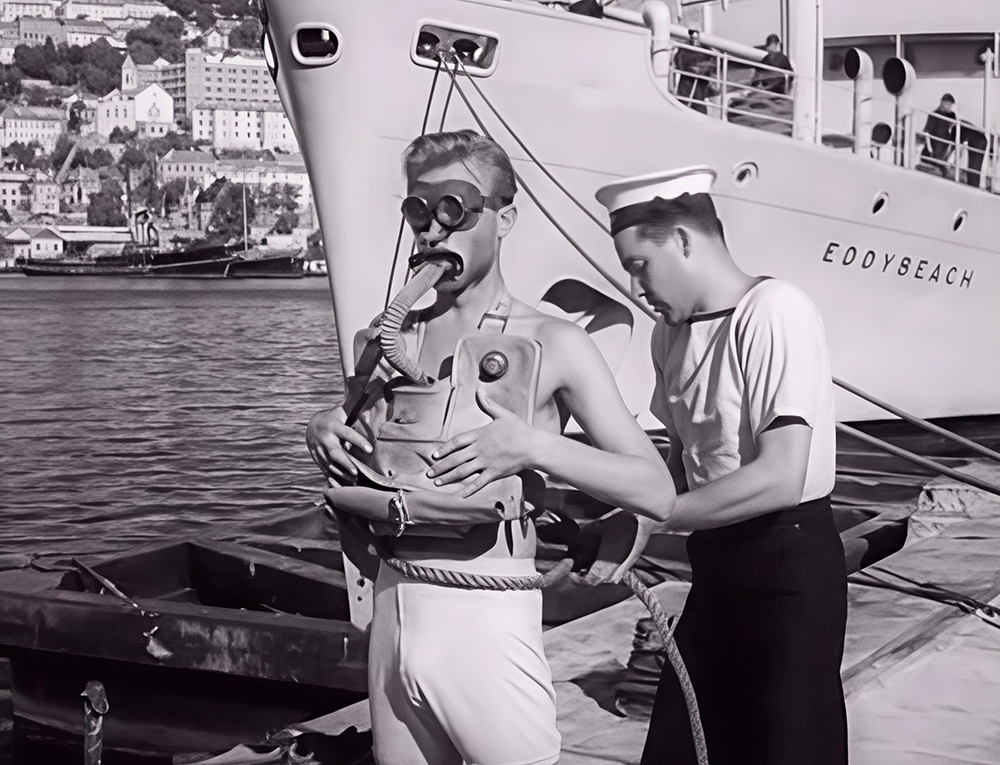
fig. 84 |
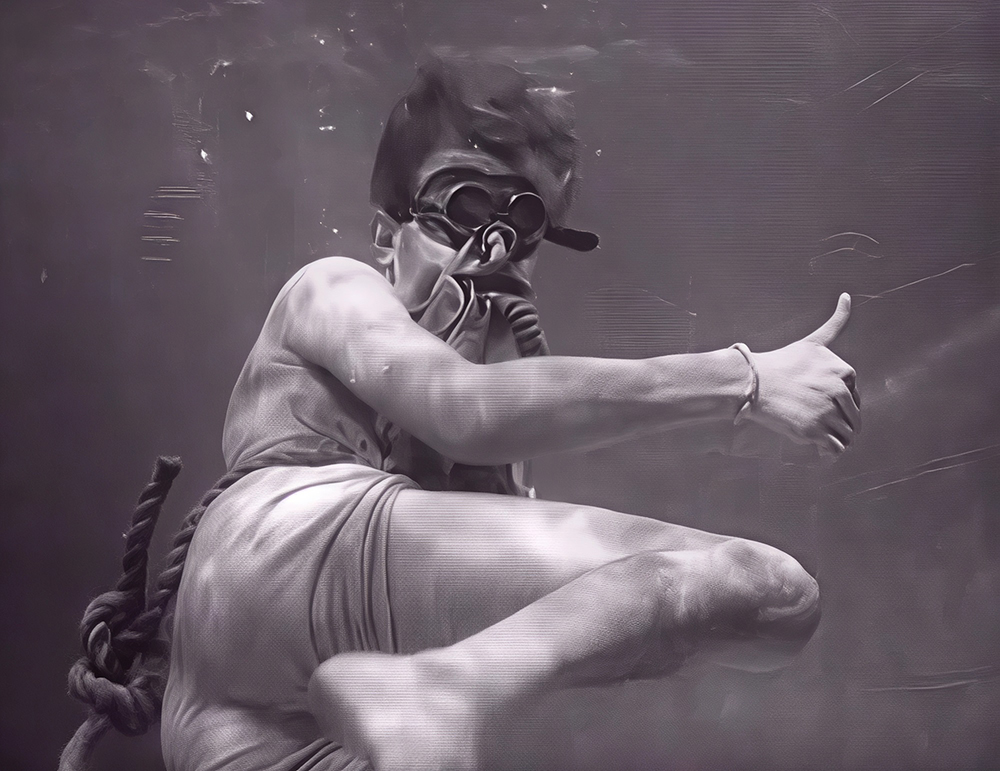
fig. 85 |
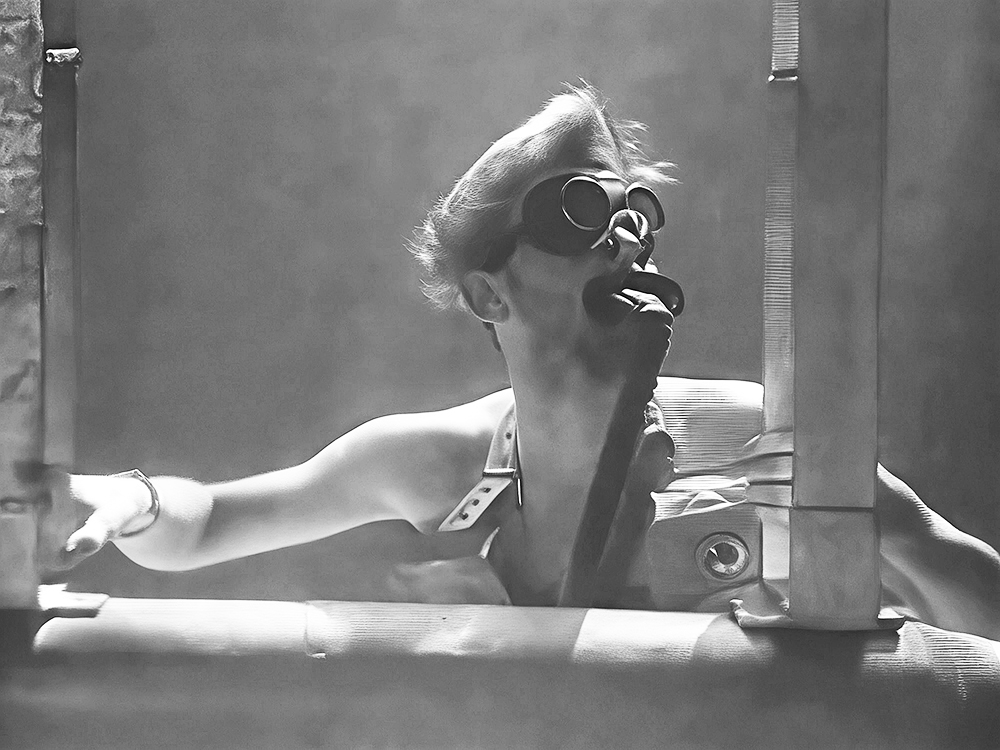
fig. 86 |
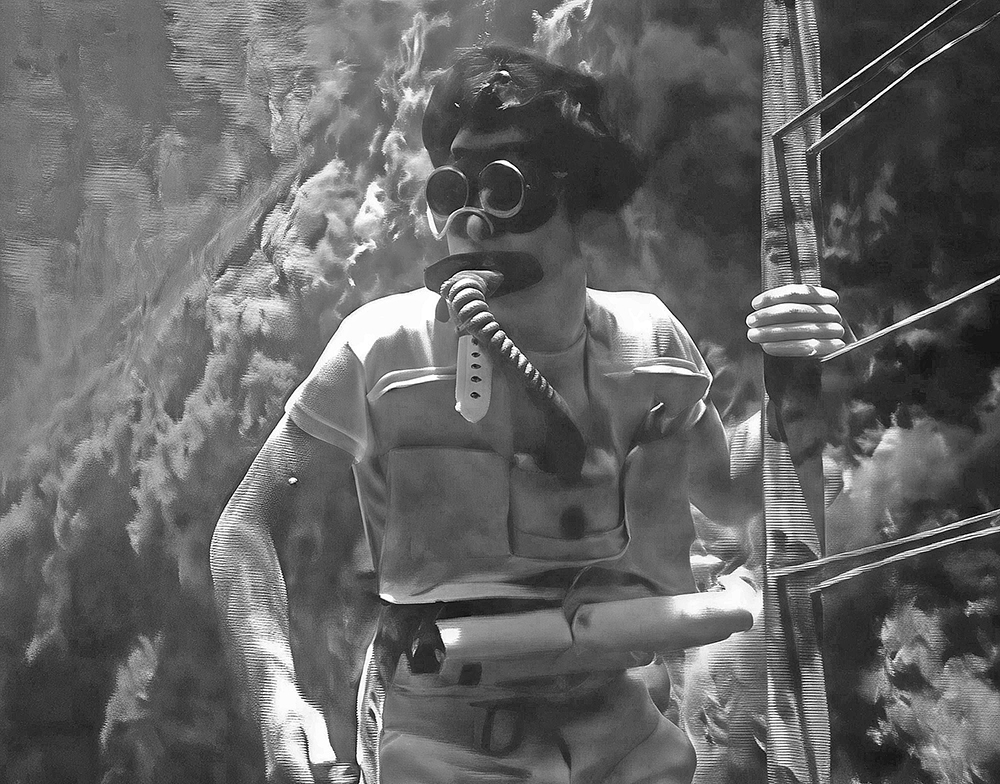
fig. 87 |
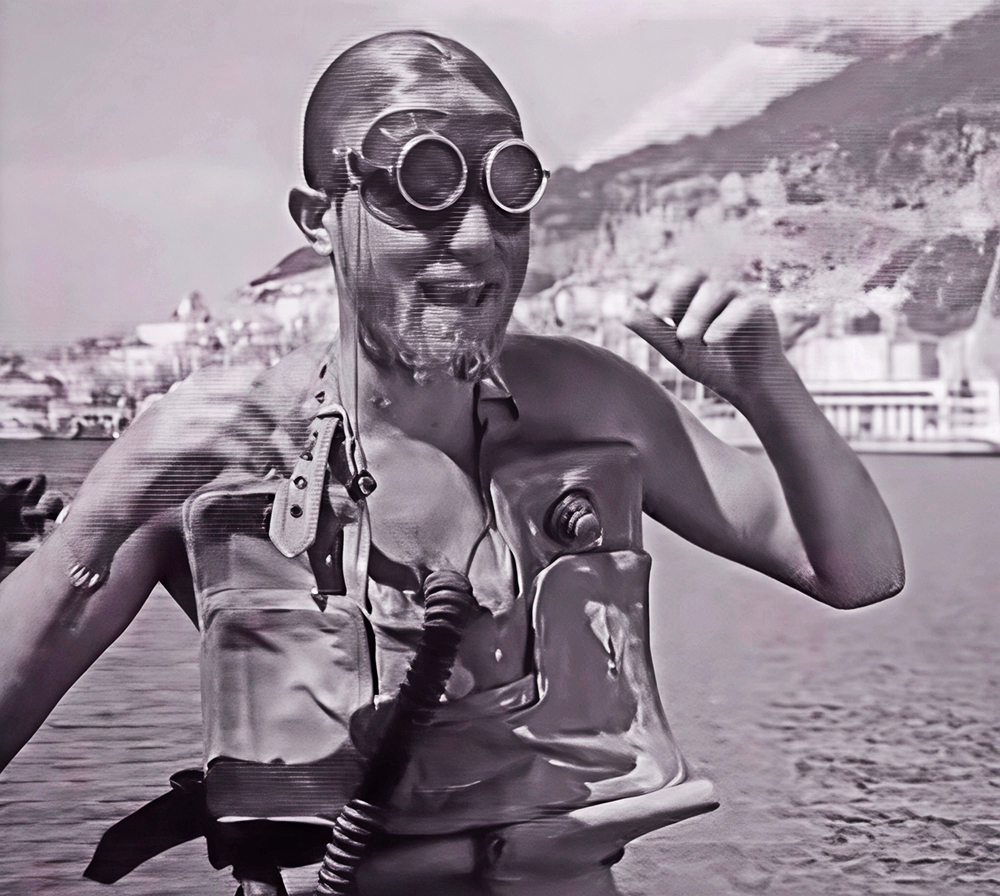
fig. 88 |
The main achievements of Crabb's adversaries, the Italian frogmen, are depicted in the movie's opening scenes, which are dedicated to the sinking of the British battleships “HMS Valiant” and “HMS Queen Elizabeth” in Alexandria harbor, an event we described previously. In the work, the attack sequences on the British ships, including the "pigs" approaching, the application and detonation of the explosive warheads under the battleships' keels, and the subsequent disengagement, are complete, effective, and quite realistic, but are somewhat historically inaccurate. In fact, the use of fins, which can be seen in the shooting images in Figs 89 and 90, was not included by the Italian "pigs" operators for this type of mission.
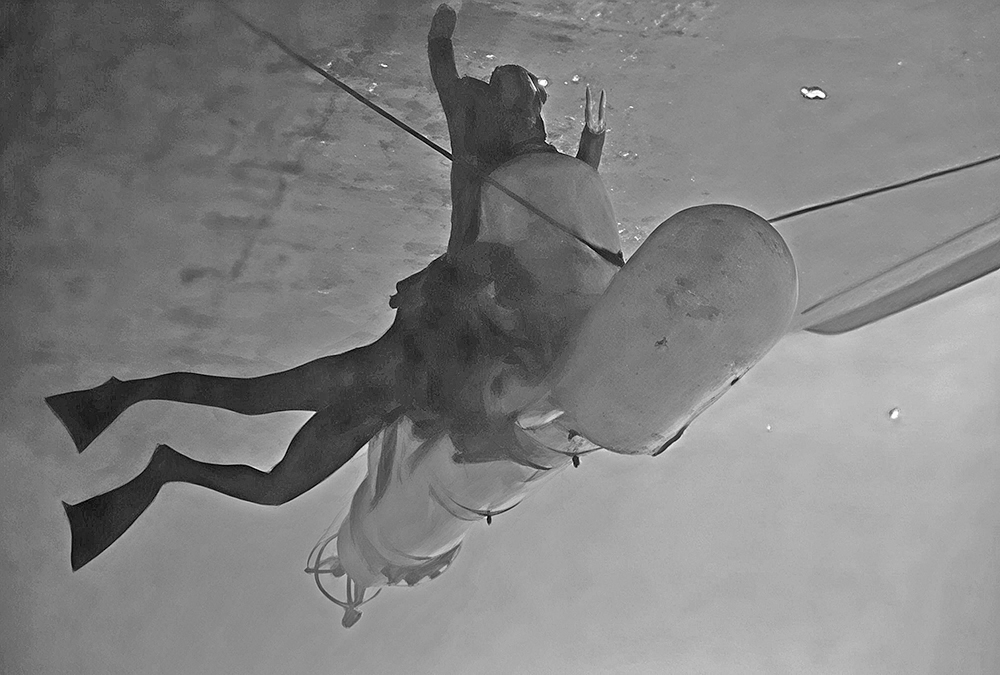
fig. 89 |
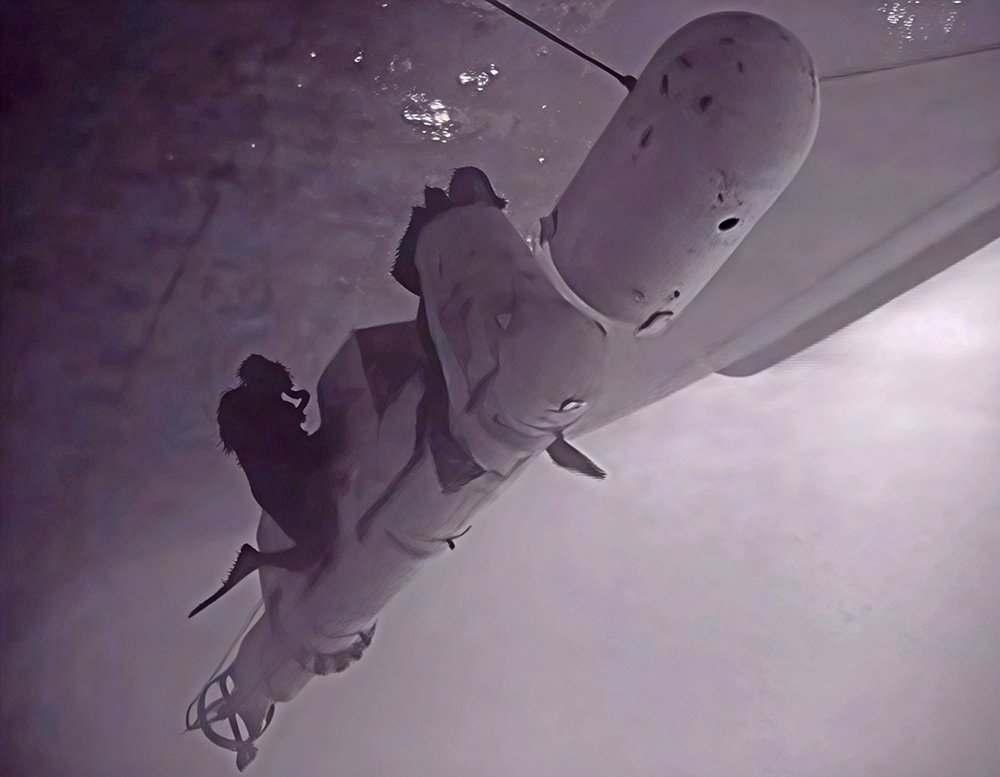
fig. 90 |
The reconstruction of the Italian secret organization in Gibraltar is also very realistic in the movie, including the gamma frogmen's starting base at Villa Carmela and the oil tanker Olterra, modified to allow the assembly, departure and the final return of the "pigs" at the end of their missions towards the Britisch military port (see Figs. 91 and 92).
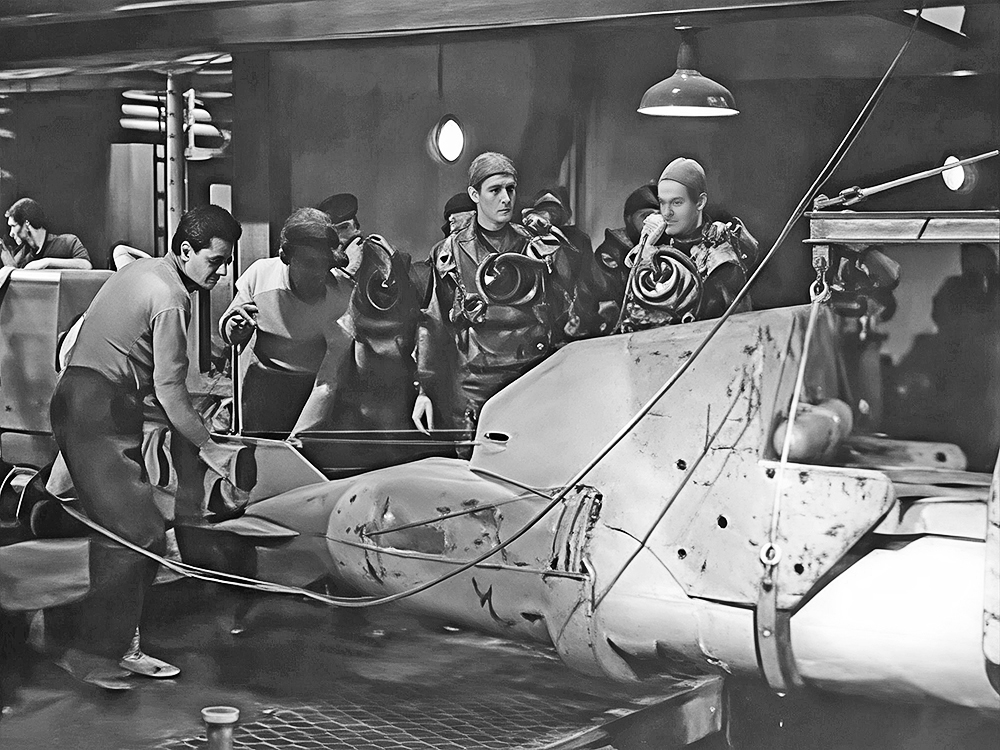
fig. 91 |
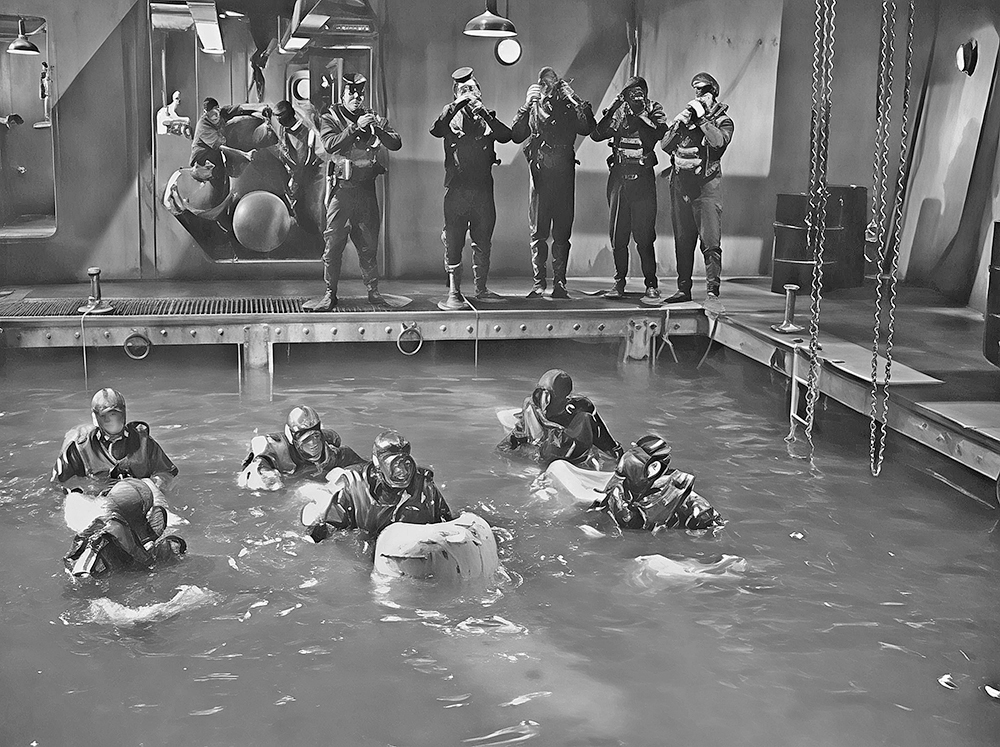
fig. 92 |
The movie's subject also includes the episode that led to the tragic deaths of Lieutenant Licio Visintini and Petty Officer Giovanni Magro, which occurred on December 8, 1942, and was likely caused by the detonation of an explosive charge launched by a harbor defense patrol boat. It is said that this defense tactic was introduced by Crabb himself.
Being a British production, the materials used in the shooting for the Italian frogmen were selected from the British production of the period. Indeed, the rebreathers recovered from the bodies of Visintini and Magro were none other than the CDBAs described above (see Figs. 93 and 94). In this case, the unit was coupled with a full-face mask provided of a round glass.
The equipment chosen in the movie for the Italian frogmen's missions was based on the typical configuration of the British frogmen of the 1950s as shown in Fig. 95. The main components of this equipment consisted of a simplified version of the CDBA rebreather, identified by the British Admiralty code A,P. 5562A (see Fig. 96), a rubber drysuit produced by Dunlop (see Figs. 97 and 98) and the classic asymmetrical commando fins copied from the American Owen Churchills and also produced by Dunlop with British Admiralty code A.P. 3386 (see Figs. 99 and 100).
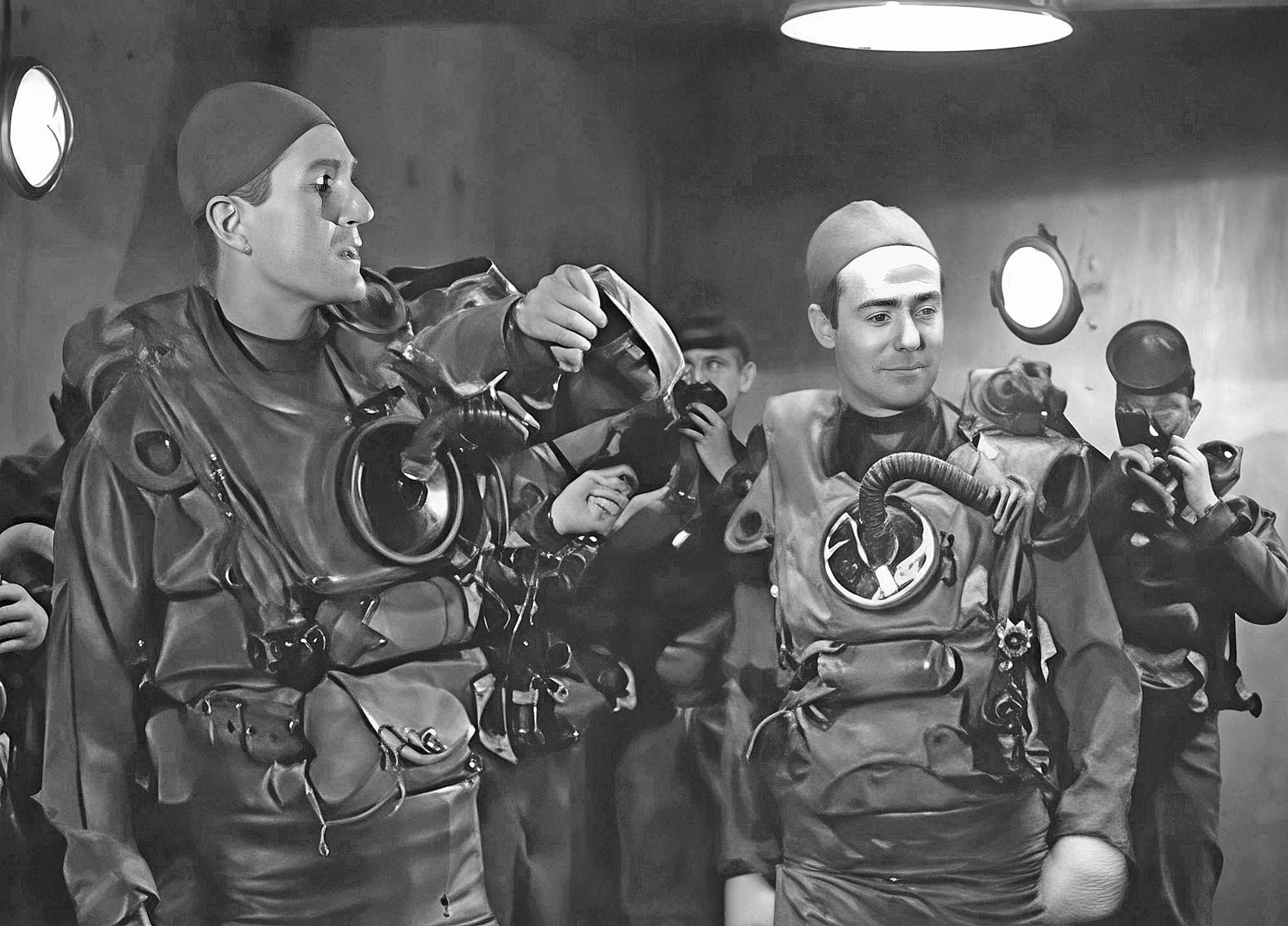
fig. 93 |
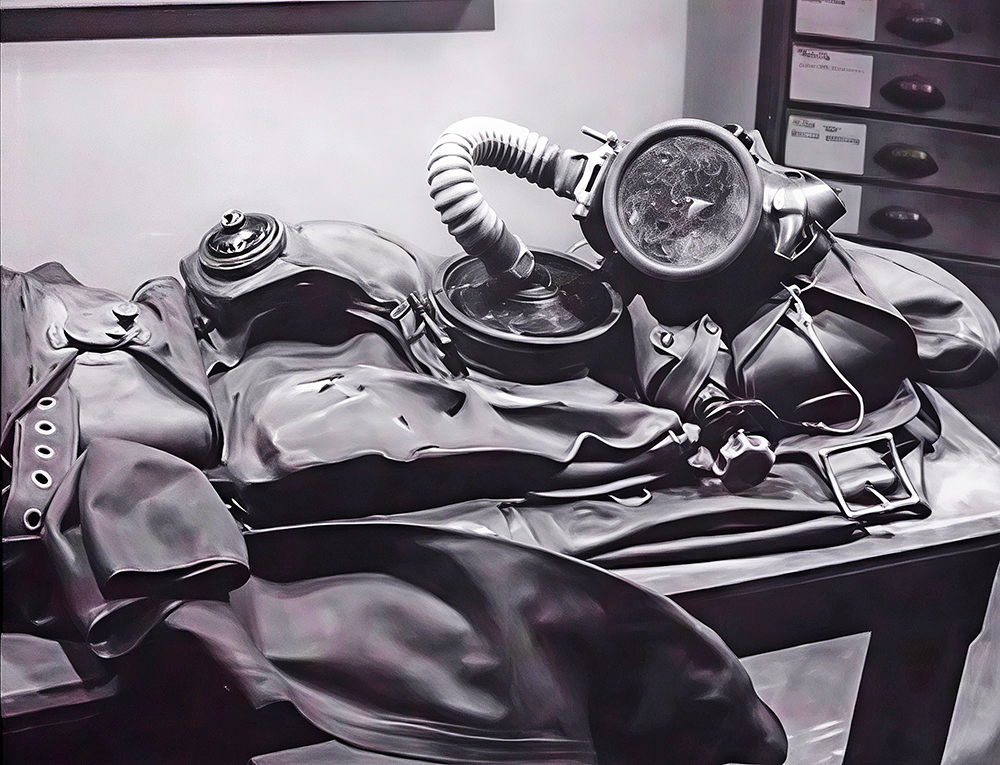
fig. 94 |
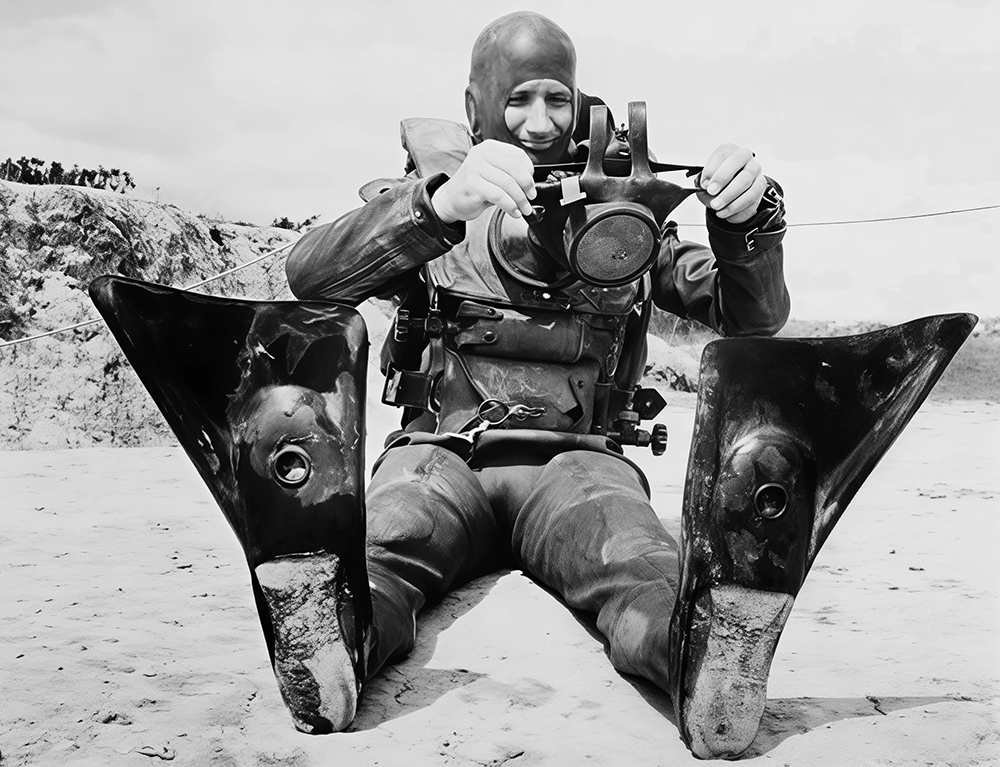
fig. 95 |
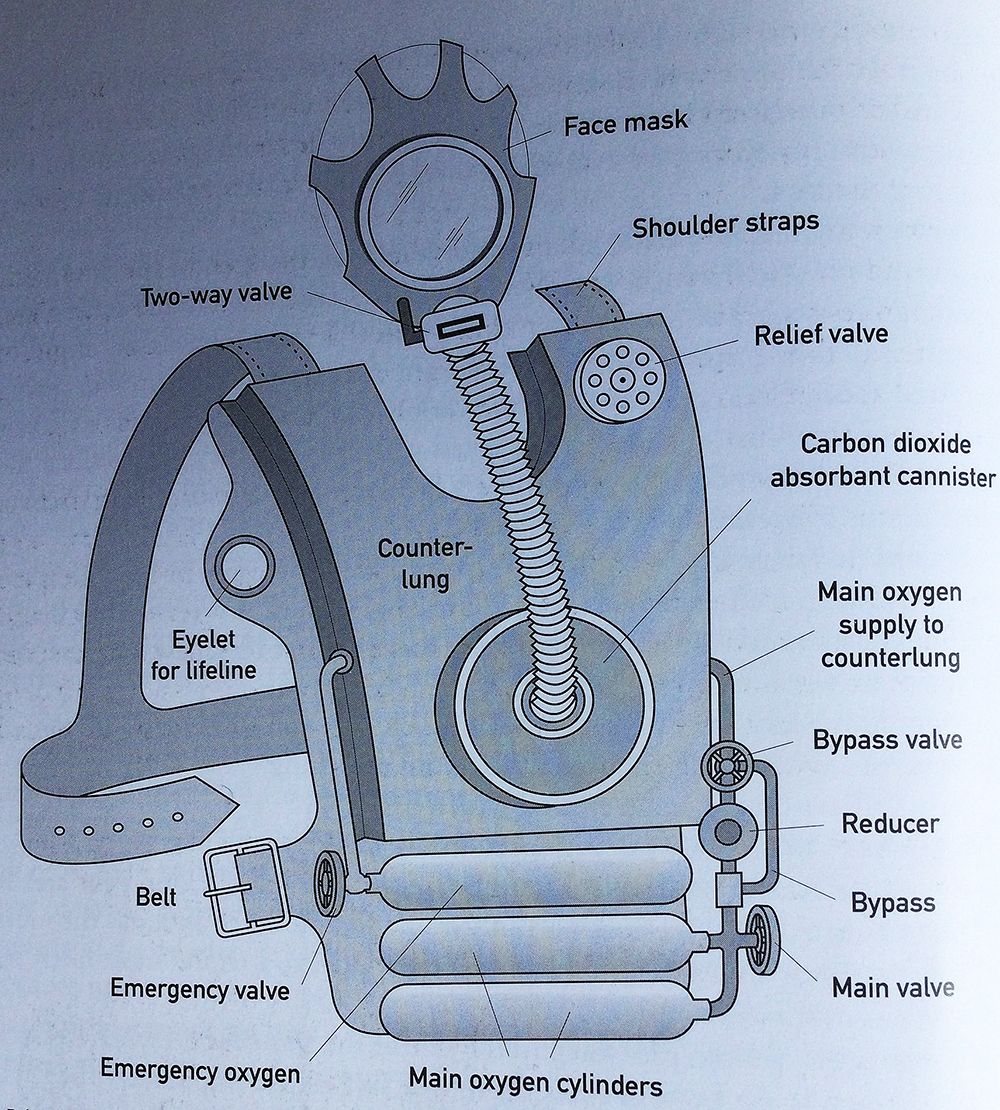
fig. 96 |
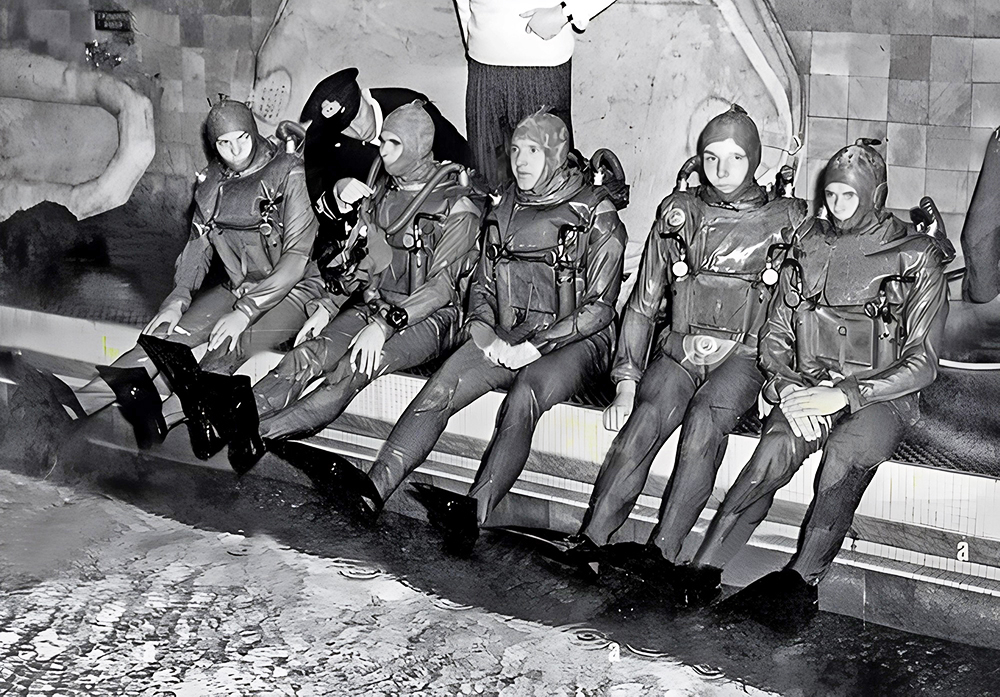
fig. 97 |
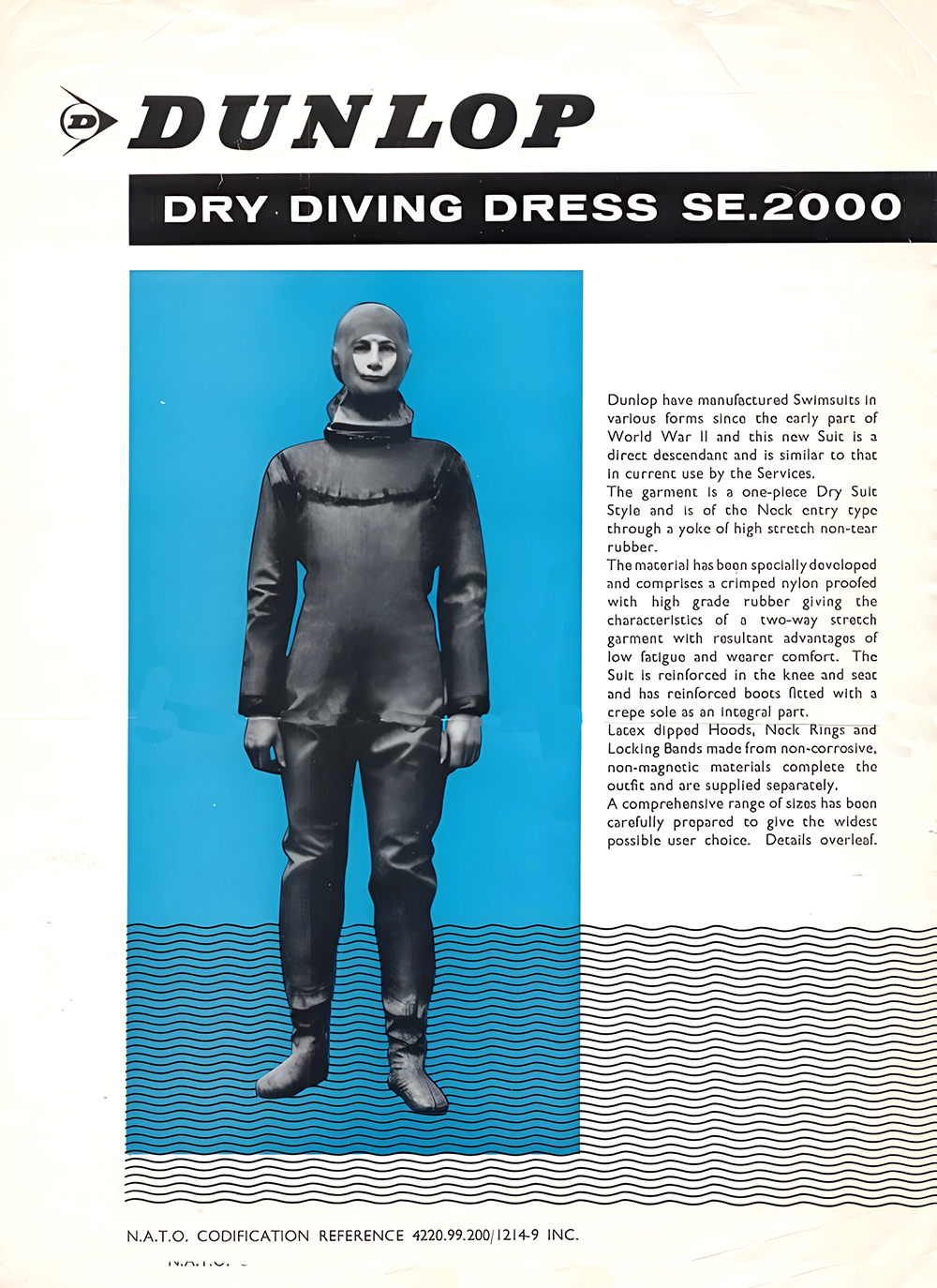
fig. 98 |
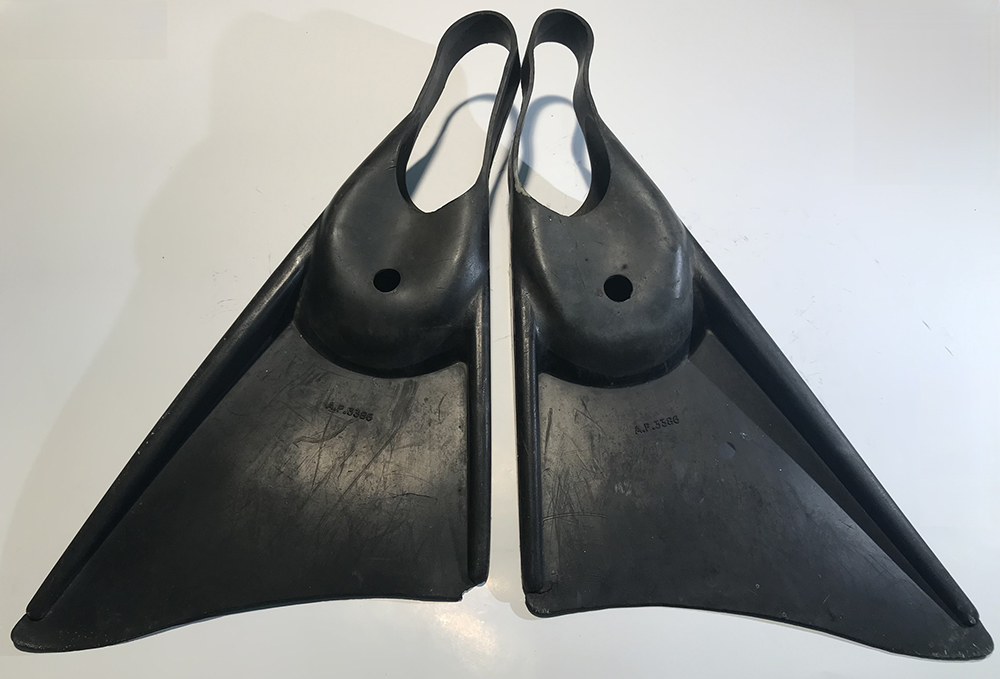
fig. 99 |
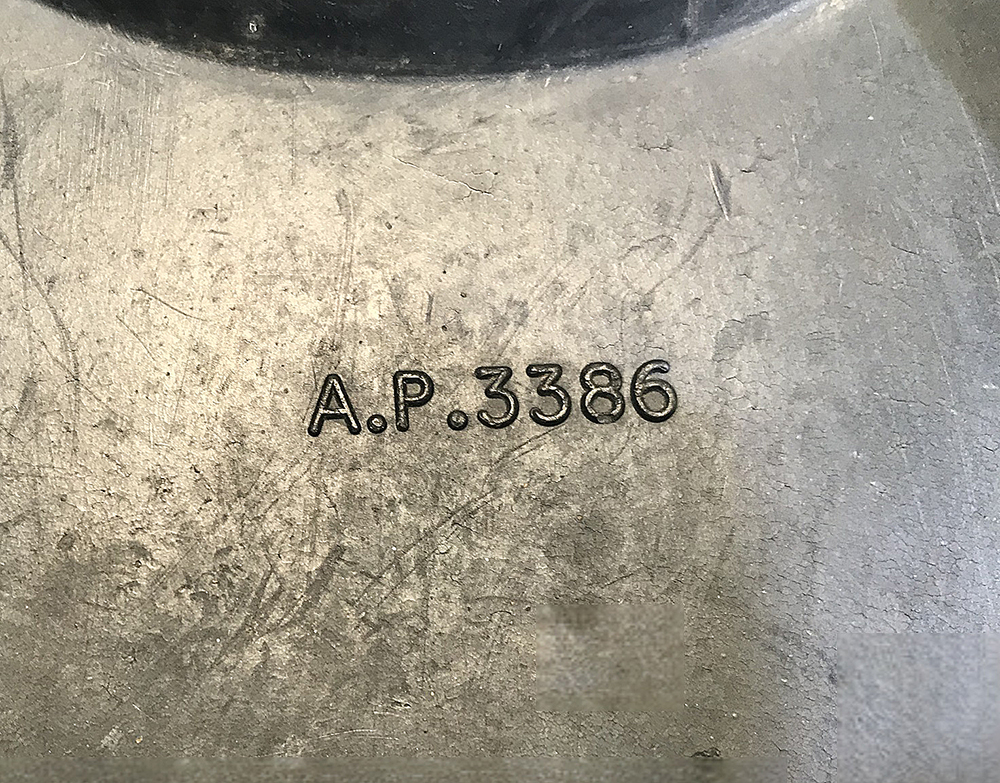
fig. 100 |
The movie is very realistic as regards the mine-clearing operations under the keels of the ships but contains completely imaginative and historically false sequences such as the hand-to-hand underwater combat between the Italian and English frogmen or the final scene in which Crabb and his second in command Knowles, using the "pig" recovered from Visintini and Magro, manage to apply its explosive warhead under the keel of the Olterra and blow it up, together with the entire group of Italian frogmen (see Figs. 101 and 102).
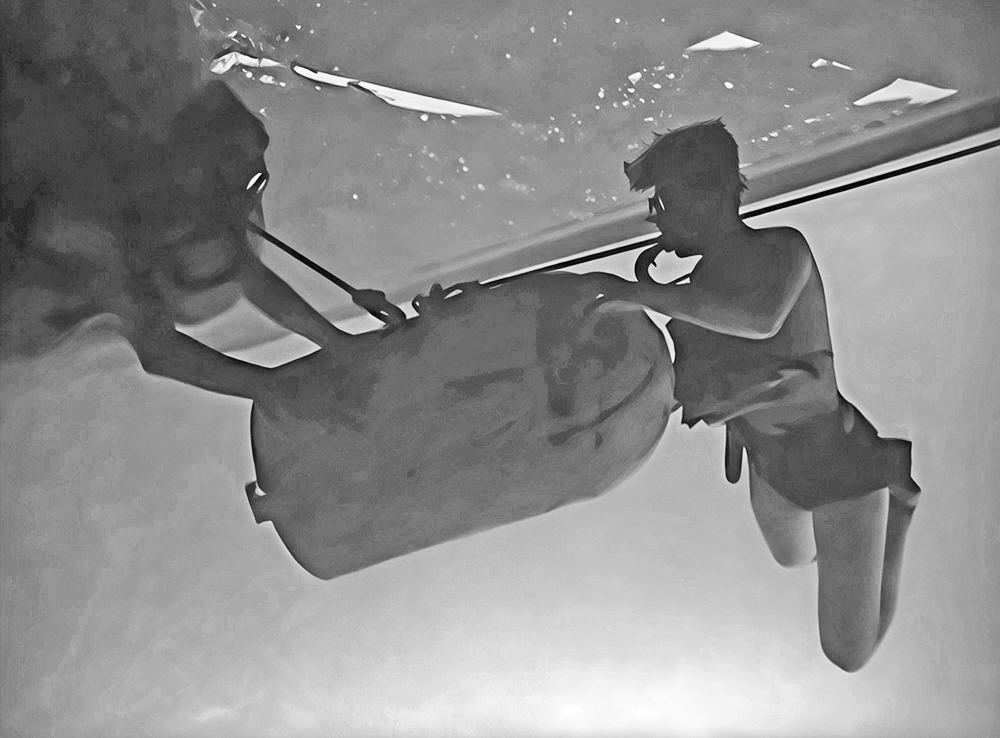
fig. 101 |
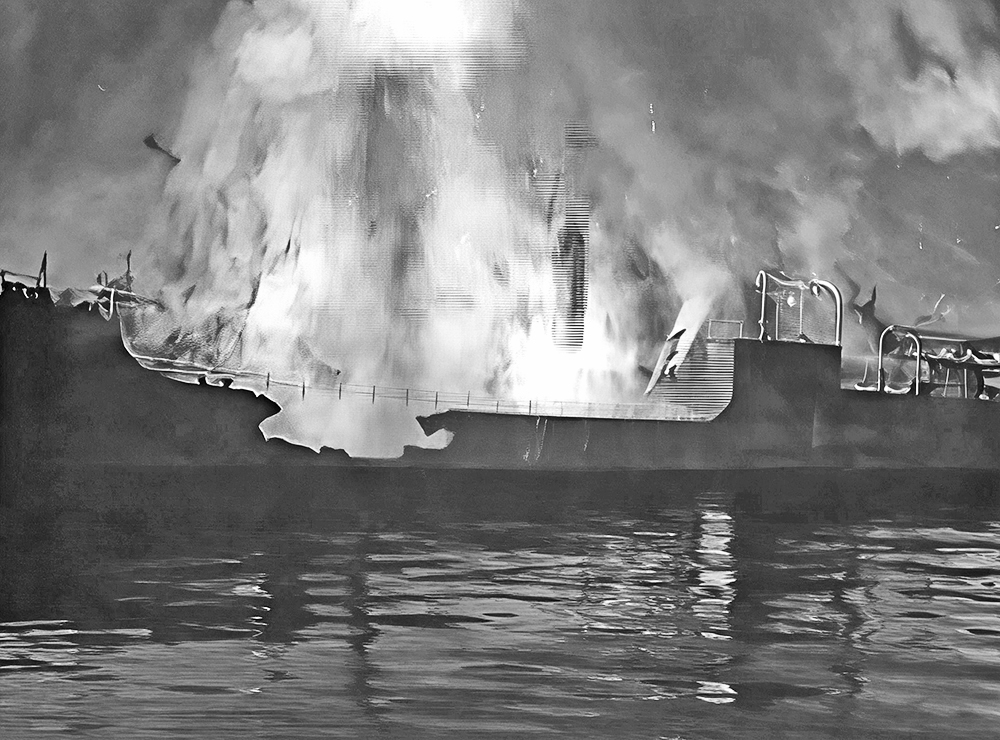
fig. 102 |
Off course, these completely fictional scenes, besides making the film more spectacular, would have been much more appreciated by the movie's main target audience, which was precisely the British one.
The history of the British X-craft midget submarines was the subject of another British movie directed by William Graham, entitled “Sfida Negli Abissi” (original title in English "Submarine X-1"), as shown in Figs. 103 and 104. The color movie was released in 1968 and starred James Caan (Commander Bolton), David Sumner (Lieutenant Davies), Norman Bowler (Lieutenant Pennington), and Brian Grellis (Petty Officer Barquist).
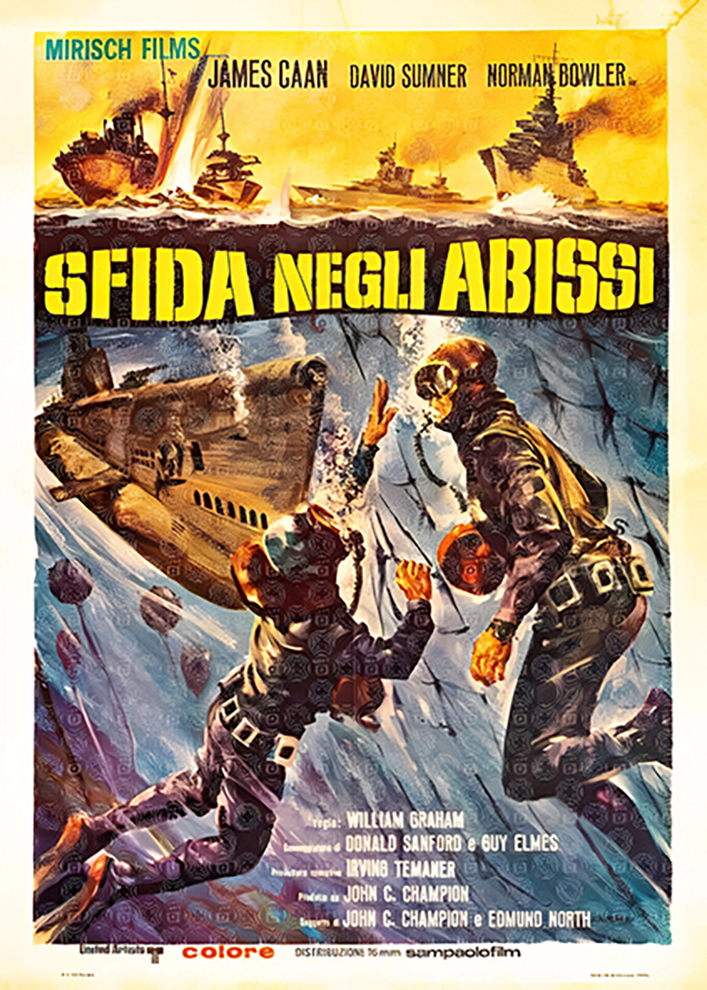
fig. 103 |
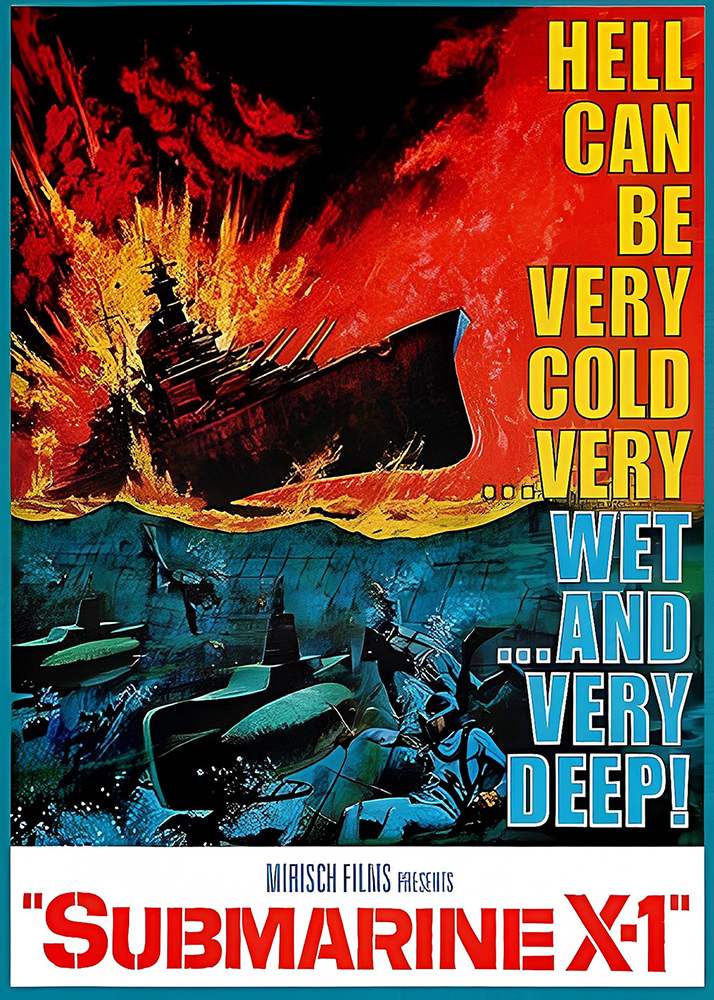
fig. 104 |
The historical reconstruction of this movie is quite rigorous regarding the training phase for the personnel of these submarines, which was carried out in remote areas of Scotland, primarily for reasons of secrecy but also in terms the underwater navigation scenes and attack sequences to the “Tirpitz” (identified in the movie as “Lindendorf”). These scenes also include the passage through an underwater minefield and the opening of passages, made by the British frogmen, in the torpedo nets protecting the German battleship's mooring area.
The diving equipment used in the shooting (see Figs. 105, 106, 107, 108, 109, and 110) was available at the time of the movie's production and likely used by the Royal Navy frogmen themselves. Some of these (rubber dry suits and asymmetrical Dunlop fins) have already been described previously. The main difference compared to the real equipment used by the divers on board the X-craft was the breathing apparatus which, in the film, consisted of an open-circuit Scuba unit.
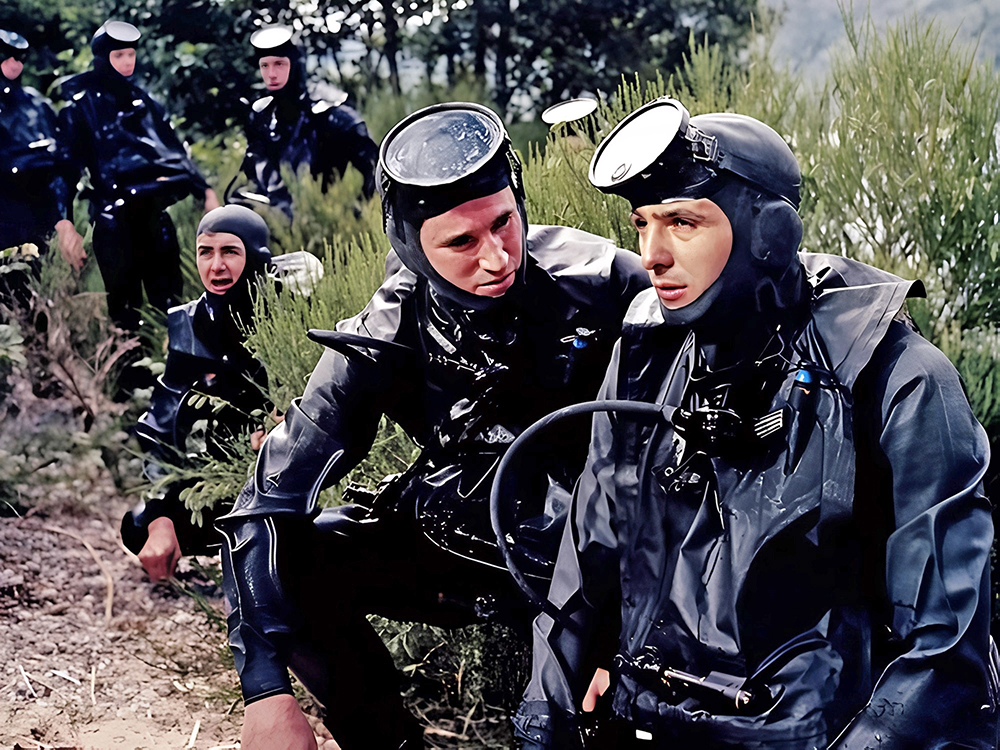
fig. 105 |
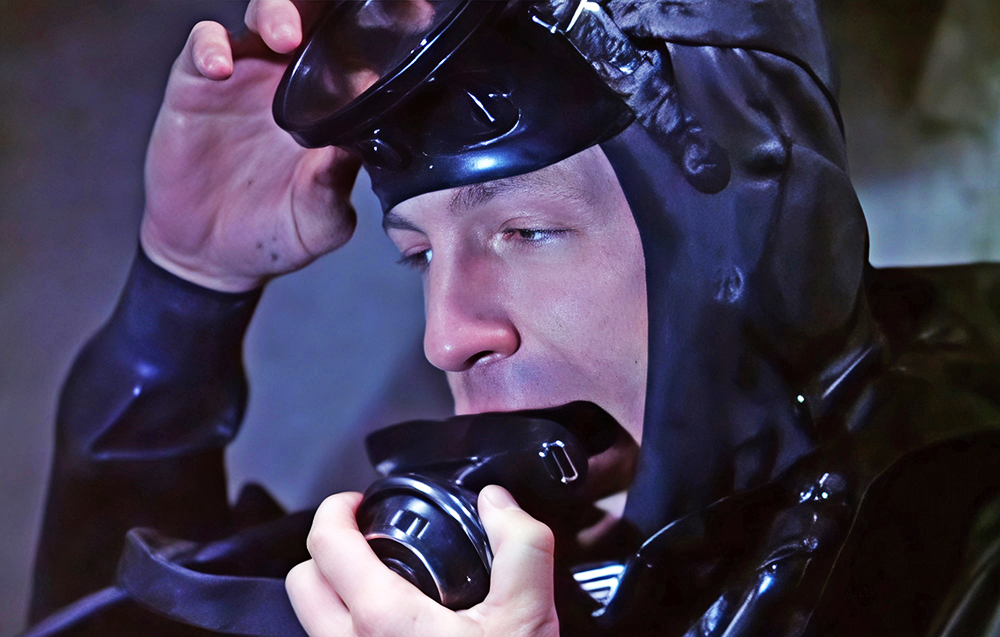
106 |
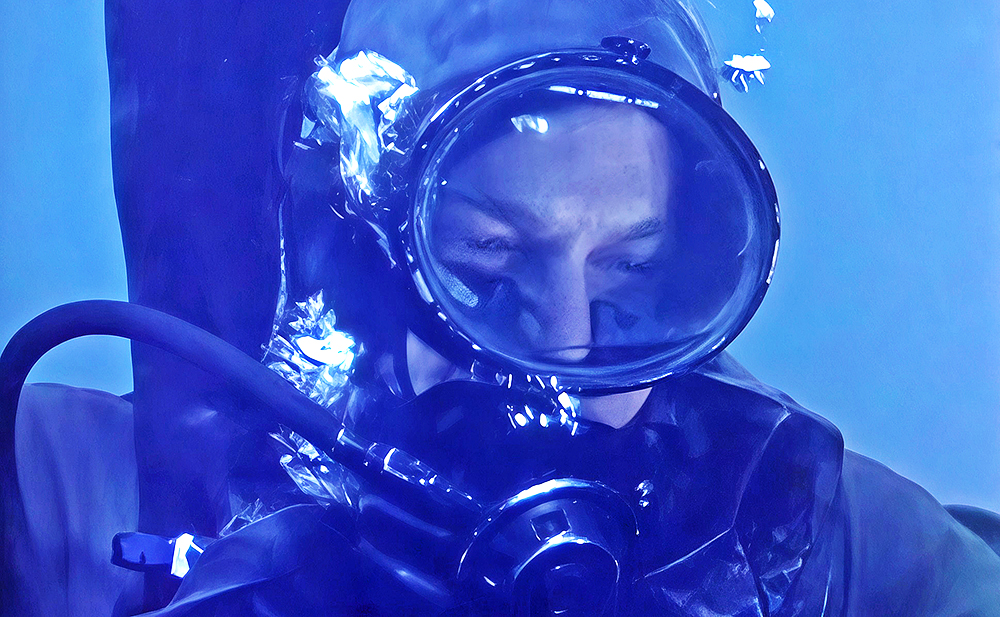
fig. 107 |
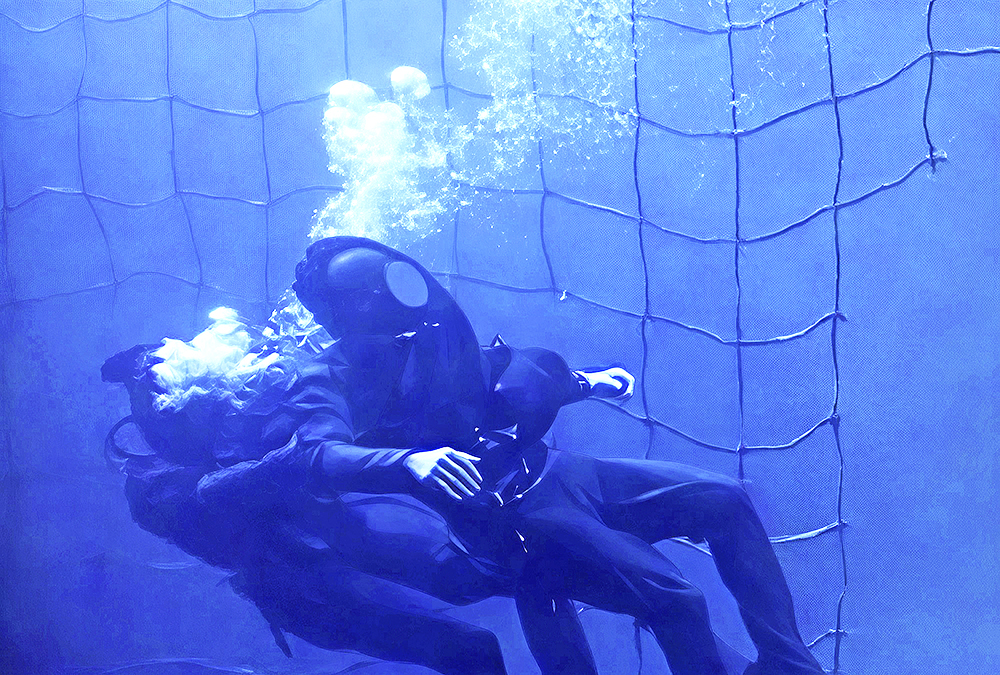
fig. 108 |
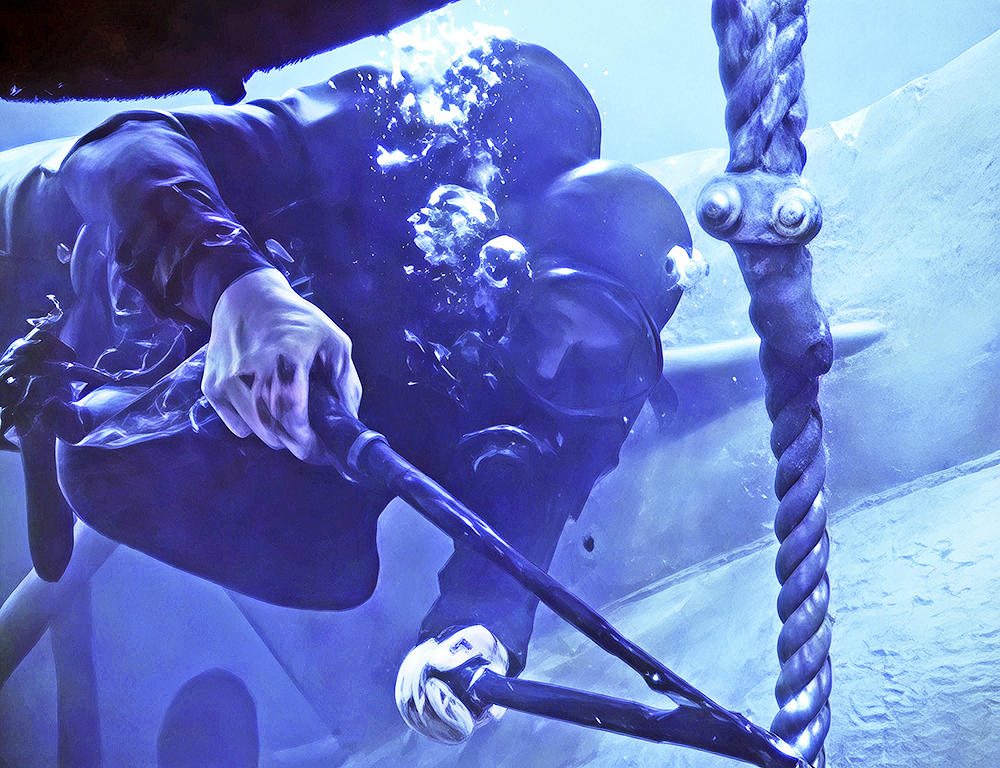
fig. 109 |
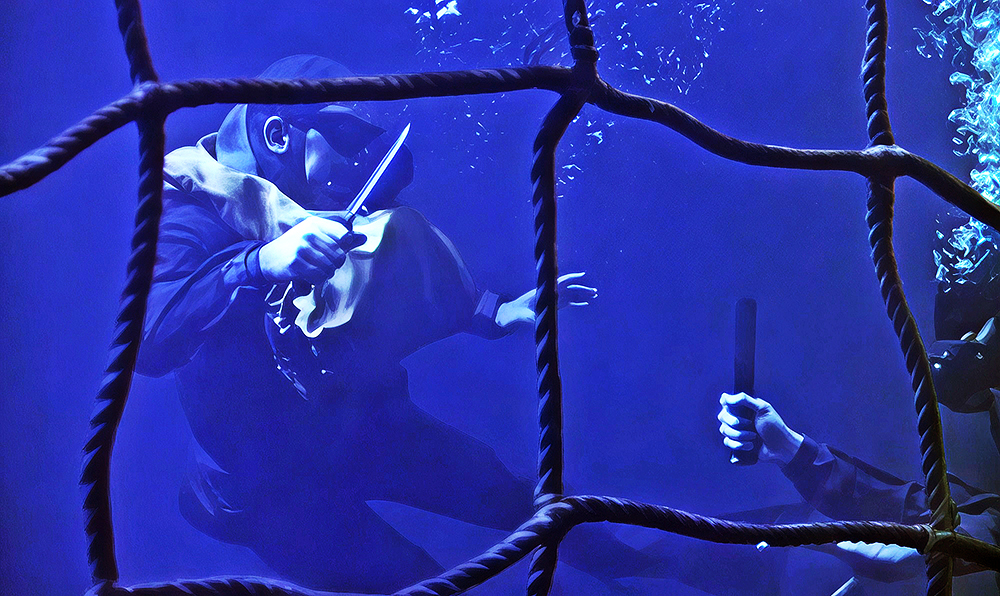
fig. 110 |
This solution would have been completely not appropriate for wartime missions, precisely because of the exhaust bubbles coming from regulator, which could have made the frogmen visible from the surface. As previously explained, in order to reduce this risk, during the Second World War missions these rebreathers were of the closed-circuit oxygen type.
The main difference between the devices used in the shooting, compared to a traditional Scuba unit, was the position of the compressed air tank, which was located on the forward and bottom area of the diver, immediately below the ring-shaped, buoyancy compensator. Off course, to reduce visibility from the surface, both the regulator and the buoyancy compensator were painted in black.
From the movie’s images shown above, we were able to identify the regulator as the Snark II model (see Fig. 111) manufactured by the Spanish company Nemrod (probably a military version painted in black). The mask was probably the Champion model, manufactured in France (see Fig. 112). Both these pieces of equipment were distributed in the UK by the famous sports goods store Lillywhites, located in London's Piccadilly Circus.
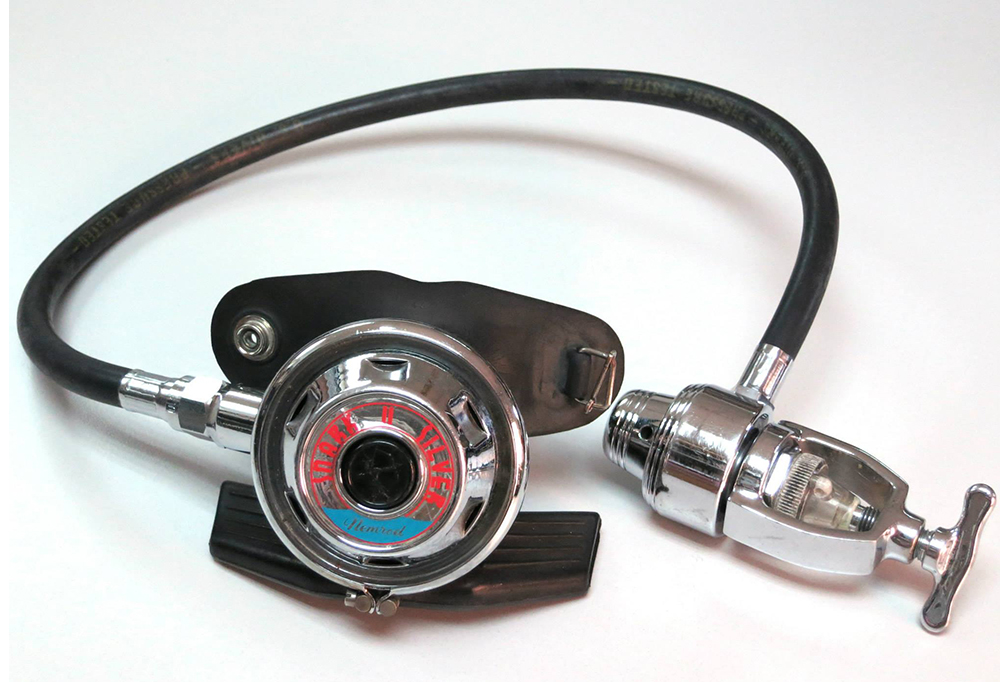
fig. 111 |
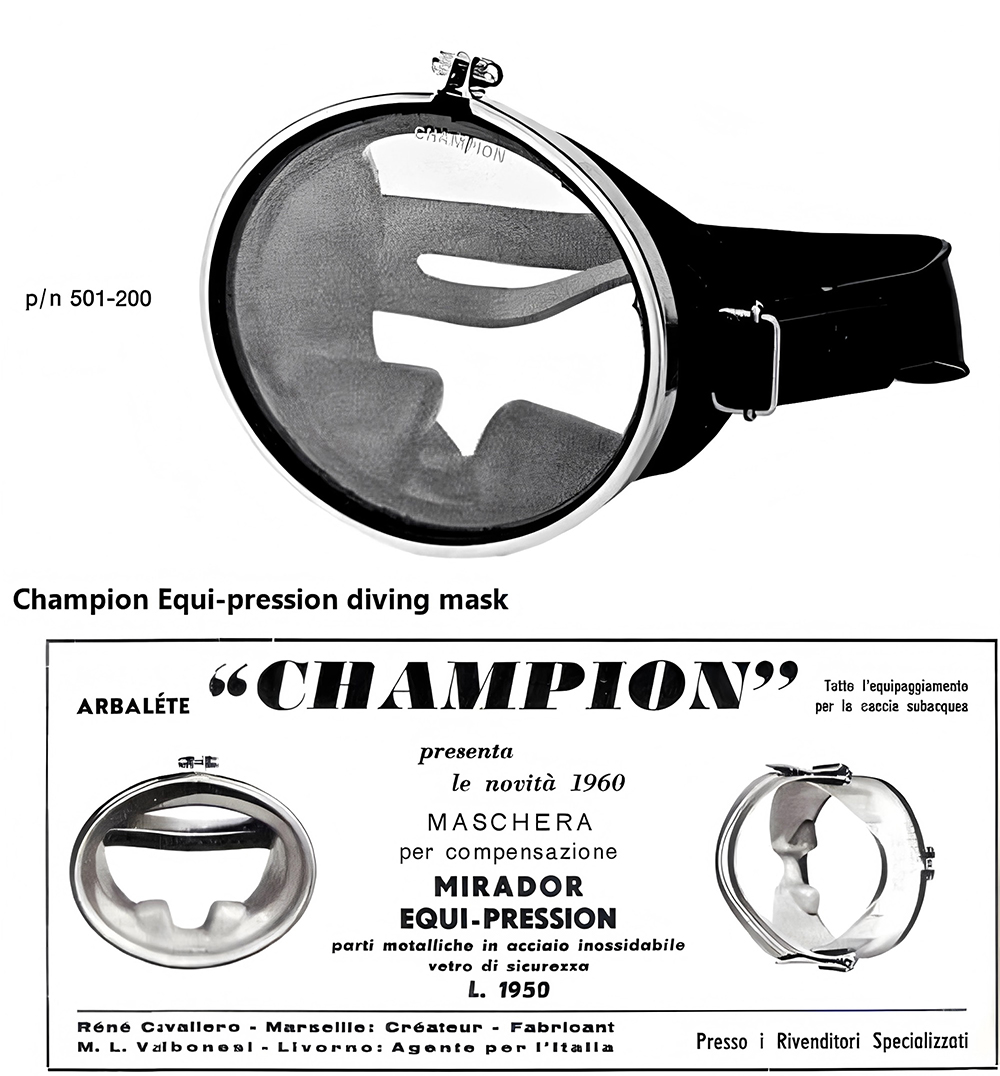
fig. 112 |
Again, to increase the spectacular effects of the scenes, the movie was enriched with completely invented actions such as the hand-to-hand fight between a German diver and the English frogmen (see Fig. 110).
___________